The Stub in Your Wallet: Why a Torn Piece of Paper Once Meant Everything
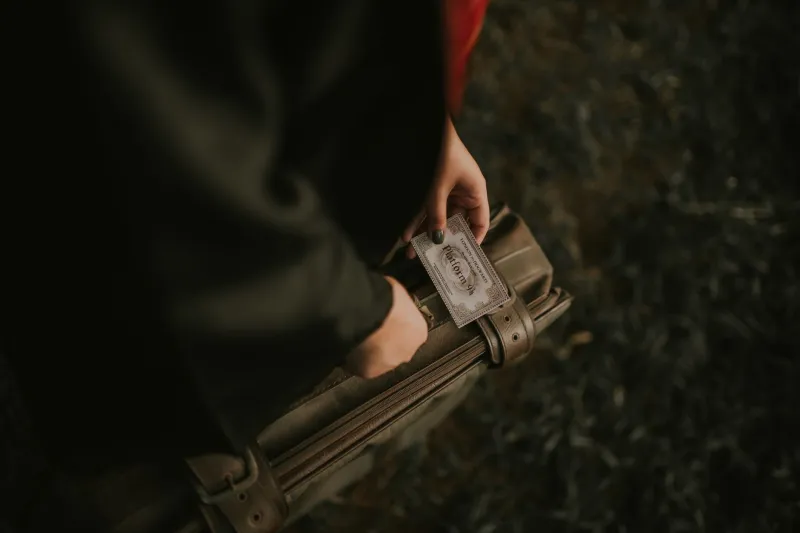
Somewhere in a shoebox in a closet somewhere in America, there is a torn ticket stub from a concert that happened forty years ago. The ink has faded. The edges are soft from being handled. It might say "Section C, Row 12" in small block letters, with the name of a band and a venue printed across the top in the font of another era. The person who kept it could tell you exactly where they were standing when the lights went down.
That stub is a time machine. And we stopped making them.
The Physical Architecture of Getting In
For most of the twentieth century, attending any major event — a baseball game, a rock concert, a Broadway show, a college bowl game — began long before the day itself. It began with obtaining the ticket.
For big events, that meant planning. Ticket sales often opened weeks in advance, and the only way to secure your spot was to show up in person at a box office window or call a phone number that was almost always busy. Box office lines on sale-day mornings were their own social phenomenon — people arriving before dawn with lawn chairs and thermoses of coffee, strangers becoming temporary friends in the shared mission of getting good seats. There was a physicality to the whole process that made the eventual payoff feel earned.
Mail-order tickets were another option, slower and riskier. You filled out a form, wrote a check, mailed it in, and waited. Sometimes the tickets arrived. Sometimes the show sold out before your envelope was processed. Sometimes the seats you got weren't the seats you'd hoped for. There was no confirmation email, no booking reference, no way to check the status of your order. You waited for an envelope to appear in your mailbox and hoped the news inside was good.
The Scalper Economy Outside the Gates
For sold-out events, a secondary market thrived entirely in cash, outside the venue, in the hour before showtime. Scalpers were a fixture of American sports and entertainment culture — figures who'd bought tickets early and were now reselling them at whatever the crowd would bear. The transaction was entirely analog: you approached, you negotiated, you handed over bills, you received a physical ticket. No receipts. No guarantees. No recourse if the ticket turned out to be counterfeit.
And counterfeits were real. The fear of holding a fake was part of the drama. You'd examine the paper, the printing, the perforations. You'd look at other tickets in the crowd and compare. When the gate attendant tore your stub and waved you through, there was a genuine moment of relief. You were in. The ticket had been real. The gamble had paid off.
That anxiety — and that relief — doesn't exist anymore. A QR code either scans or it doesn't, and the system tells you instantly. Something was gained in certainty. Something was lost in story.
The Stub as Souvenir
Once you were inside, the torn half of your ticket became something else entirely. It became a souvenir. People kept them in wallets for weeks after an event, reluctant to throw away the last physical remnant of a night they didn't want to forget. They went into scrapbooks, taped alongside photographs and setlists scrawled on napkins. They got pinned to bulletin boards in dorm rooms. Some got framed.
The stub carried information that mattered: the date, the venue, the event. But it also carried something harder to name — a texture, a weight, a realness. It was proof that you had been somewhere specific, on a specific night, in a specific seat. It connected the memory to a material object in a way that a screenshot of a booking confirmation simply doesn't.
Collectors understood this instinctively. A ticket stub from a historic concert — the Rolling Stones at Madison Square Garden, the Beatles at Shea Stadium — is a genuine artifact. Museums hold them. Auction houses sell them. They are primary sources, physical evidence of cultural moments. The digital equivalent doesn't exist in the same way. A booking confirmation from a 2019 concert lives in an email archive until the server is wiped or the account is closed.
 Photo: The Rolling Stones, via pictures.abebooks.com
 Photo: Shea Stadium, via images8.alphacoders.com
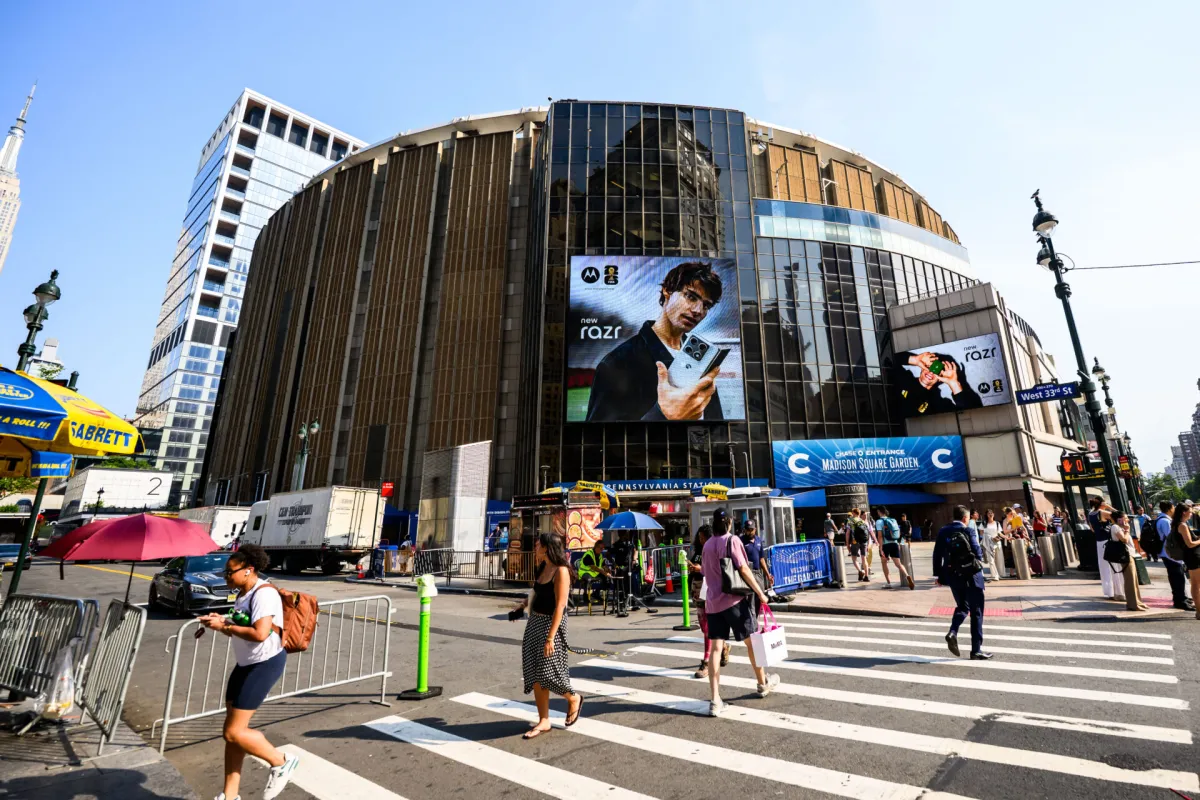 Photo: Madison Square Garden, via www.visions.de
The Quiet Disappearance
The shift away from physical tickets happened gradually and then all at once. Print-at-home tickets arrived in the late 1990s, letting people generate their own admissions on regular printer paper. The experience of holding a "real" ticket began to erode. Ticketmaster and its competitors moved toward barcodes, then toward mobile delivery, then toward fully digital wallets where the ticket never exists as a printable object at all.
The pandemic accelerated everything. Contactless entry became a health priority, and the remaining holdouts in live entertainment — minor league stadiums, smaller venues, county fairs — moved to digital scanning practically overnight. Today, the physical ticket is largely a nostalgia product. Special-edition paper tickets are occasionally issued for historic events as collectibles, which is its own kind of irony: the thing that used to be the default is now the premium option.
What We Gave Up Without Noticing
There's nothing objectively wrong with a QR code. It's faster, harder to counterfeit, and impossible to lose in the traditional sense — though anyone who has fumbled with a dying phone battery at a stadium gate might dispute that last point. The practical advantages are real.
But experiences that leave behind no physical trace are different in a subtle way. When a concert ends and you walk out into the parking lot, the only evidence it happened lives in your phone's camera roll and your own memory. There's no object to hold. Nothing to tuck into a pocket. Nothing to find years later in a drawer and feel the whole night come rushing back.
The ticket stub was never just about getting in. It was about having something to show for where you'd been.