Months in the Dark: What Happened After a Serious Diagnosis Before Modern Medicine Got Organized

Imagine your doctor delivers news you weren't expecting. Something serious. Something that needs a specialist. He writes a name on a notepad, tears it off, and hands it to you across the desk. "Give them a call," he says. And just like that, you're on your own.
For millions of Americans in the 1960s and 1970s, that moment — the handoff — was where the real ordeal began. Not the illness itself, but the system you had to navigate to treat it. A system that was fragmented, slow, and almost entirely invisible to the patient sitting in the middle of it.
The Referral Was Just the Starting Gun
In an era before electronic health records, centralized hospital networks, or care coordination teams, a referral from your primary care doctor was less a warm handoff and more a cold introduction. Your doctor might write a letter — an actual letter, on paper, mailed through the postal service — to a specialist across town or in another city. That letter carried your history, your test results, maybe a summary of recent visits.
Except it didn't always arrive. Or it arrived incomplete. Or the specialist's office received it but filed it under the wrong name. There was no tracking number. No confirmation email. No patient portal showing you that the document had been received and reviewed. You simply waited, called periodically to ask if anything had moved, and hoped.
The waiting lists themselves were a separate kind of anguish. Specialists in fields like cardiology, oncology, or neurology often had backlogs stretching months into the future. Not weeks — months. And because there was no centralized scheduling system, patients had no real way to know where they stood in line. You called the receptionist. She checked a physical appointment book. She told you the earliest opening was fourteen weeks away. You took it, wrote it on your calendar, and tried not to think too hard about what fourteen weeks might mean for your condition.
Paper Records and the Postal System as Healthcare Infrastructure
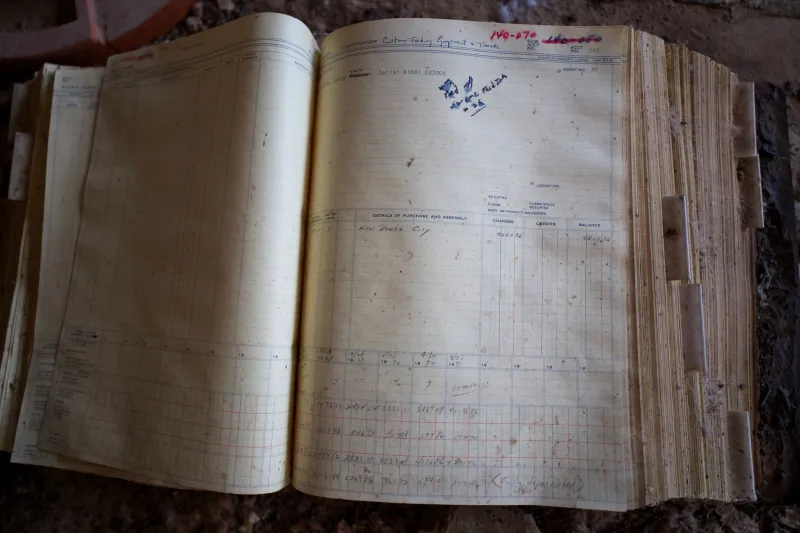
The physical movement of medical records between offices was one of the great unacknowledged bottlenecks of mid-century American healthcare. Every time you saw a new provider, your records had to travel with you — or ahead of you. That meant requesting copies, paying for duplicates, waiting for offices to process the request, and then physically transporting folders of X-ray films and typed summaries to appointments yourself.
X-ray films, in particular, were unwieldy artifacts. Large, fragile, stored in oversized envelopes. Patients sometimes carried them on buses and trains. They got left in waiting rooms. They got damaged. And if a specialist wanted a second opinion from a colleague in another city, those films went into a mailing tube and crossed state lines on their own quiet journey, with no guarantee of a timely return.
The result was that your medical story existed in pieces, scattered across multiple offices, none of them fully aware of what the others knew. Coordination — real coordination — depended almost entirely on the individual initiative of your doctors. Some were meticulous about it. Many were simply too busy.
What Patients Were Never Told
Perhaps the most striking difference between then and now isn't the speed of the system — it's the silence. Patients in this era were rarely given a clear timeline, a treatment plan with milestones, or any meaningful visibility into what was happening behind the scenes. Medicine operated on a kind of institutional authority that didn't feel obligated to explain itself.
You trusted your doctor. You waited. You called occasionally and were told things were progressing. What "progressing" meant was often unclear. Whether your file had actually reached the specialist, whether your insurance had approved the next step, whether the lab results had been interpreted — none of that was automatically communicated to you. You were a passenger in a vehicle you couldn't see out of.
For families managing a serious illness — a cancer diagnosis, a cardiac event, a neurological condition — this opacity added a layer of psychological weight that's hard to overstate. The not-knowing was its own kind of suffering.
The World That Replaced It
Today, the experience of receiving a serious diagnosis and being referred to a specialist looks almost nothing like it did fifty years ago. Electronic health record systems allow your primary care doctor to send a referral to a specialist's office in seconds. Your test results, imaging reports, and visit summaries travel digitally, instantly, and are accessible to every authorized provider in your care network.
Patient portals — platforms like MyChart and their equivalents — put your entire medical history in your pocket. You can see your lab results the same afternoon they're processed. You can message your care team directly. You can track the status of a referral, confirm that your records have been received, and review your upcoming appointments in a single app. The fourteen-week wait still exists in some specialties and regions, but at least you can see where you stand.
Telemedicine has further collapsed the geography that once made specialist access so difficult. A patient in rural Montana can consult with a neurologist in Boston without getting on a plane. Second opinions that once required mailing films across the country now happen over video calls with shared digital imaging.
The Gap Between Then and Now
The chasm between mid-century healthcare navigation and today's coordinated care systems is enormous — and yet it's easy to forget how recently that chasm existed. Many Americans alive today spent years inside the old system. They remember the phone calls that went unreturned. The forms that got lost. The months that passed between a diagnosis and a first specialist appointment while their condition quietly progressed.
Progress in medicine is often measured in treatments and cures — new drugs, better surgical techniques, improved survival rates. But the organizational revolution that happened quietly underneath all of that — the digitization of records, the networking of providers, the shift toward patient-centered transparency — may be just as significant. It transformed not just how Americans get treated, but how much they understand about what's happening to them while it does.