Dressed for the Job You Feared Losing: When Your Outfit Was Your Professional Survival Strategy

In the spring of 1962, a young woman starting her first job at a Manhattan insurance firm was pulled aside by her supervisor on day three. Not because of her work. Not because of her attitude. Because she'd worn a sleeveless blouse. She was told, quietly but firmly, that bare arms in the office were not acceptable. She didn't wear sleeveless again for eleven years — not until she'd left that company entirely.
This wasn't unusual. It was Tuesday.
The Unwritten Rulebook Nobody Had to Write Down
For much of the 20th century, American workplace dress codes operated less like official policy and more like ambient social pressure — constant, invisible, and extraordinarily effective. In corporate offices, law firms, banks, and government buildings, the rules were understood without being stated. Men wore suits. Full suits, every day, regardless of August heat or personal preference. A tie was not optional. A hat was often expected for the commute, even if removed indoors.
For women, the requirements were both more elaborate and more punishing. Girdles were standard undergarments well into the 1960s — not chosen, but expected, their absence occasionally commented upon by supervisors. Skirts had to fall below the knee. Stockings were mandatory even in summer. Hair had to be neat in a way that communicated containment. The underlying message was consistent: your body and its presentation belong, in part, to this institution.
Deviation carried real consequences. Not always formal ones — HR departments weren't handing out written warnings for the wrong hemline — but social ones. You'd be passed over for a client meeting. Your name wouldn't come up when a promotion was discussed. Someone senior would mention, with a smile, that you didn't quite seem ready. The dress code enforced itself through reputation, and reputation in mid-century corporate America moved at the speed of gossip.
What the Suit Actually Signaled
To understand why workplace dress was so rigid, you have to understand what it represented. The postwar American office was a highly stratified environment where professional identity was precious and fragile. For men who'd grown up poor and clawed into the middle class, the suit wasn't oppressive — it was evidence of arrival. It said: I belong here. I am serious. I am not my father's factory floor.
For women, who were fighting for legitimacy in spaces that hadn't originally been designed for them, dress became a way of negotiating visibility. Appear too feminine and you weren't taken seriously. Appear too masculine and you were threatening. The acceptable band was narrow, and navigating it required constant calculation.
Class was embedded in every detail. The quality of your fabric, the cut of your jacket, the brand of your shoes — these weren't trivial signals. In a world without LinkedIn profiles or public portfolios, your appearance was one of the primary data points colleagues and clients used to assess your competence and status. Looking the part wasn't vanity. It was strategy.
The Slow Loosening
The first real crack appeared in the late 1960s, when cultural upheaval started bleeding into office culture. Younger workers pushed back. Skirt lengths rose. Some men abandoned hats entirely. By the 1970s, polyester suits and wider lapels signaled that the old formality was losing its grip, even if the suit itself remained.
The next seismic shift came in the 1990s, and it came from Silicon Valley. Technology companies, staffed by engineers who saw formal dress as irrelevant to their actual work, normalized a radically different aesthetic. Jeans. Sneakers. T-shirts. And crucially, these companies were making enormous amounts of money, which made it very difficult for traditionalists to argue that the hoodie was incompatible with professional success.
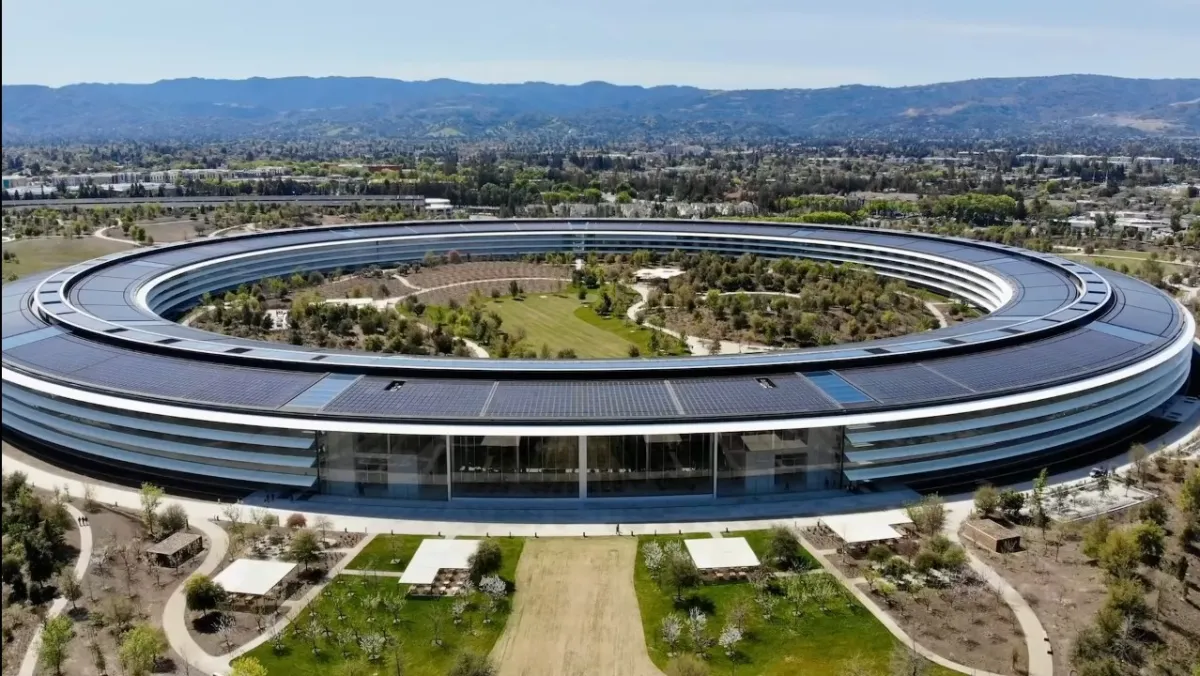 Photo: Silicon Valley, via 1.bp.blogspot.com
"Casual Friday" arrived in mainstream American offices as a cautious experiment — a single day of relaxed standards to boost morale. Within a decade, it had expanded into casual every day in many industries. The suit didn't disappear, but it stopped being the default.
The Remote Work Endgame
Nothing accelerated the collapse of the formal dress code faster than the shift to remote work. When the office became a rectangle on a laptop screen, the entire logic of dressing for professional performance fell apart. People discovered, with some surprise, that their productivity didn't require pressed trousers. Video calls normalized the sight of executives in fleece pullovers. "Business casual" became a phrase people used with mild irony.
Today, dress codes vary so wildly by industry, company, and individual manager that making generalizations is almost impossible. A software engineer in San Francisco might wear the same outfit to a client presentation that a 1960s office worker would have worn to mow the lawn. A financial analyst in New York might still suit up every day — not because the rules require it, but because the culture rewards it.
 Photo: San Francisco, via images.contentstack.io
What the Clothes Were Really About
The story of the American workplace dress code is ultimately a story about control and belonging. The suit was never just a suit. It was a membership card, a performance, a daily act of institutional allegiance. When that allegiance became optional — when companies decided they'd rather retain talented people than enforce grooming standards — the whole system unraveled faster than anyone expected.
What replaced it isn't chaos. It's something more interesting: a workplace where identity is negotiated differently, where the signals are subtler, and where the cost of getting dressed in the morning is, for many Americans, finally just about staying warm.