Eight Neighbors, One Phone Line, Zero Privacy: America's Shared Telephone Era
The Ring That Wasn't Yours
Picture this: you're trying to call your boyfriend in 1962, but when you pick up the phone, Mrs. Henderson from down the road is already deep in conversation with her sister about someone's questionable casserole at the church potluck. You hang up and wait. Twenty minutes later, you try again—this time it's the Johnsons discussing crop prices. You wait some more.
 Photo: Mrs. Henderson, via i.pinimg.com
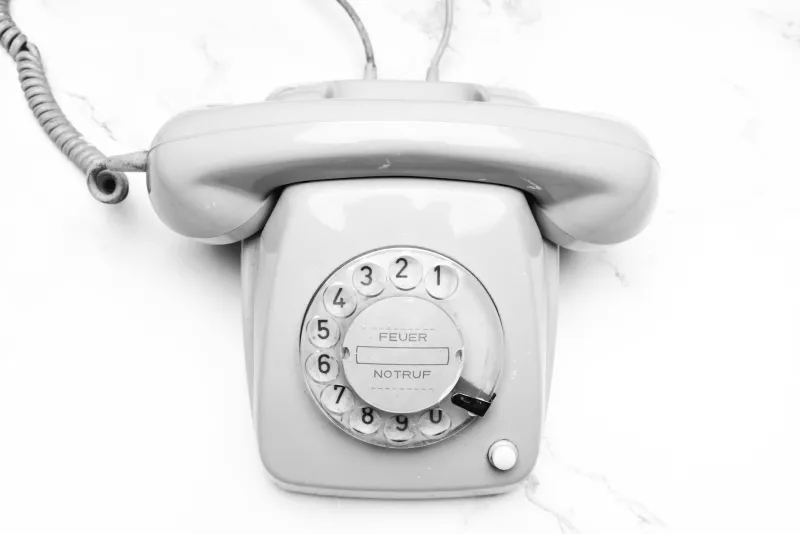
This wasn't a broken phone system. This was the party line, and for millions of Americans living in rural areas and small towns, it was simply how telephones worked. One physical line served multiple households, and everyone shared the same connection whether they liked it or not.
The Art of Eavesdropping
Each household on a party line had a distinctive ring pattern—two long rings, one short ring, three short rings—so you'd theoretically know when a call was meant for you. But there was nothing stopping you from quietly picking up the receiver when you heard any ring pattern and listening in on your neighbors' conversations.
And people absolutely did this. Party line eavesdropping became a form of small-town entertainment, a way to stay informed about local gossip, and sometimes the only source of news about what was happening in the community. Mrs. Kowalski might know about the Miller family's financial troubles before Mr. Miller's own brother did, simply because she happened to be listening when the bank called.
 Photo: Miller family, via png.pngtree.com
 Photo: Mrs. Kowalski, via zorvianix.com
Some people became notorious party line lurkers, known for their heavy breathing or the telltale click of their receiver. Others developed elaborate codes and euphemisms to discuss sensitive topics, though determined eavesdroppers often cracked these amateur encryption attempts.
Emergency Etiquette and Telephone Tyranny
The party line system created its own complex social hierarchy and unwritten rules. If someone was hogging the line for what others considered frivolous conversation, neighbors might pick up and pointedly clear their throats or even interrupt to ask them to hurry up. During emergencies, there was an understood protocol that everyone else should immediately hang up to clear the line.
But not everyone followed these rules. Some households became notorious for monopolizing the line during peak hours, leading to neighborhood feuds that could last for years. Others used their knowledge of everyone's calling patterns to deliberately tie up the line when they knew someone important was trying to reach a neighbor they disliked.
Young people trying to have romantic conversations faced the additional challenge of knowing that potentially eight different households could be listening to their most intimate moments. Many couples developed their own shorthand or agreed to meet in person rather than risk having their private conversations become public entertainment.
The Business of Shared Communication
Party lines weren't just a rural quirk—they were an economic necessity. Running individual phone lines to every farmhouse and remote property would have been prohibitively expensive for telephone companies. The party line system allowed them to serve scattered populations while keeping costs manageable for both the company and customers.
Subscribers paid based on how many households shared their line. An eight-party line was cheaper than a four-party line, which was cheaper than a two-party line, which was still much cheaper than a private line. For many families, the choice was between a party line and no phone at all.
Telephone companies actually marketed the social aspect of party lines as a feature, not a bug. Advertisements suggested that sharing a line would help neighbors stay connected and build stronger communities. What they didn't advertise was how this system would turn ordinary phone calls into potential public performances.
The Death of Communal Listening
By the late 1960s, technological advances and increased demand for privacy began to make party lines obsolete in most areas. Direct distance dialing, which allowed people to place long-distance calls without operator assistance, required individual lines. The growing importance of business calls and teenagers' desire for private conversations created pressure for change.
The transition happened gradually, with many rural areas maintaining party lines well into the 1970s and some remote locations keeping them even longer. But as the cost of individual lines decreased and the social tolerance for shared communication diminished, the party line era quietly ended.
From Forced Transparency to Encrypted Isolation
Today's communication landscape represents the complete opposite of the party line era. We carry encrypted devices that allow us to communicate privately with anyone in the world, and the idea of neighbors routinely listening in on our conversations seems almost dystopian.
Yet something was lost in this transition. The party line system, for all its frustrations and privacy violations, created a form of community connection that modern technology has struggled to replace. Neighbors knew each other's voices, stayed informed about local events, and maintained social bonds through shared communication infrastructure.
The contrast is striking: we've moved from a world where privacy was nearly impossible to one where isolation is the default setting. Americans who once couldn't make a phone call without potentially involving their entire neighborhood now struggle to maintain meaningful connections with people living next door.
The Unintended Consequences of Perfect Privacy
The party line era forced Americans to develop communication skills that we've largely forgotten. People learned to be more concise, more considerate of others' time, and more creative in expressing sensitive information. They also developed thicker skin about privacy and a more communal approach to personal information.
Whether this was better or worse than today's system depends on your perspective, but it was undeniably different. The party line era represents perhaps the last time in American history when private communication was genuinely public, creating social dynamics that shaped entire communities in ways we're only beginning to understand now that they're gone forever.