Popcorn, Palaces, and the Whole Afternoon: What Going to the Movies Used to Actually Mean
Think about the last time you went to a movie theater. You probably pulled out your phone, picked a showtime, reserved your seat, and showed up with seven minutes to spare. You watched the film, shuffled out past the closing credits, and were back on your couch within two hours of leaving it.
Now try to imagine doing none of that. No reserved seats. No specific showtime to catch. No idea what was even playing until you were standing in front of the marquee. And somehow — somehow — that version of the movies was more exciting.
That's the chasm between mid-century American moviegoing and what cinema looks like today. The distance is wider than most people realize.
The Picture Palace Was the Point
From the 1920s through the 1960s, the great American movie theater wasn't just a room with a screen. It was a spectacle before the projector even started rolling. Cities across the country built what were known as picture palaces — enormous, ornate theaters with gilded ceilings, velvet curtains, uniformed ushers, and lobbies that felt closer to a European opera house than anything you'd find on a strip mall.
Places like the Roxy in New York City, the Fox Theatre in Detroit, or Grauman's Chinese Theatre in Hollywood weren't simply venues. They were destinations. Working-class families dressed up to attend. Kids wore their Sunday best. You didn't slouch into a picture palace — you arrived.
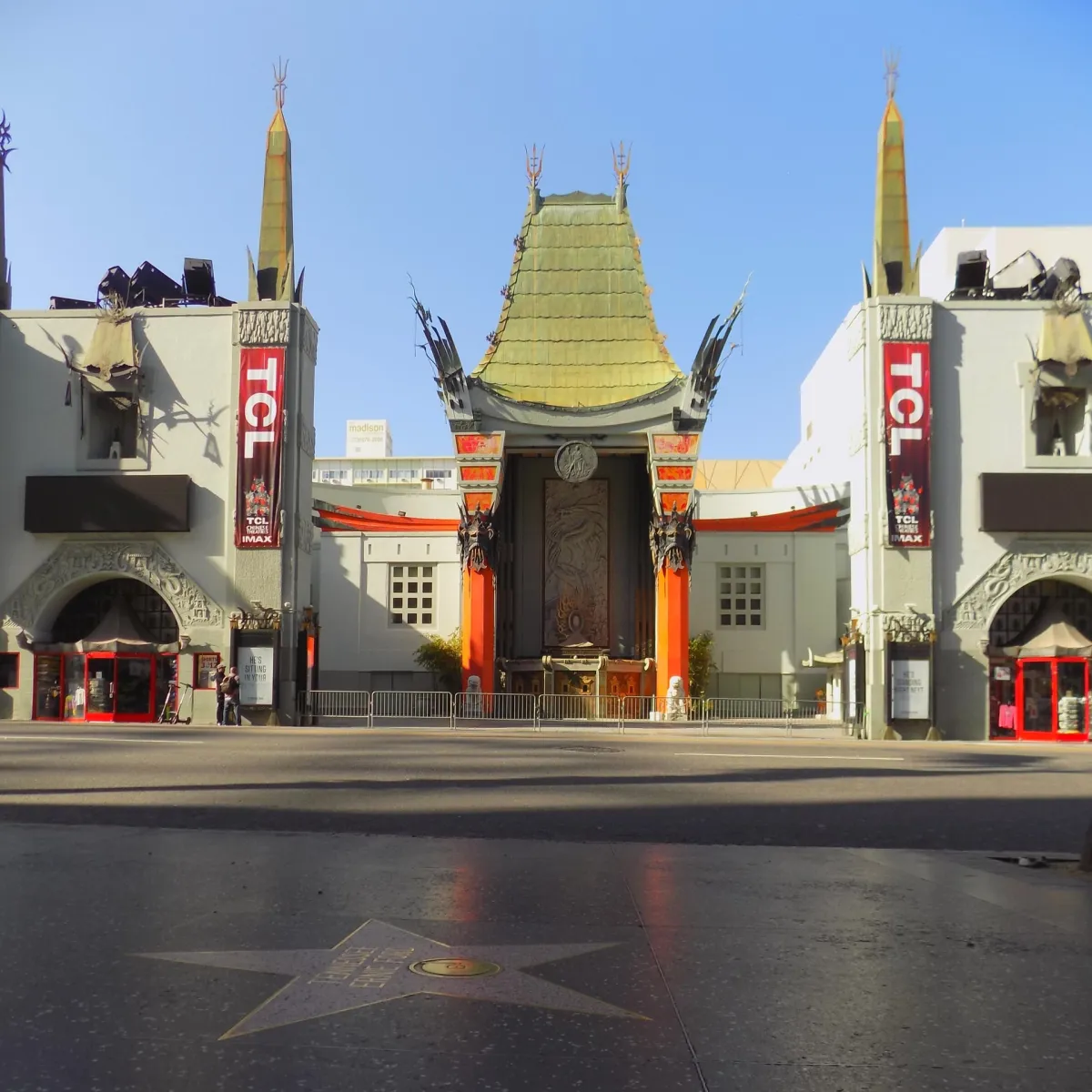 Photo: Grauman's Chinese Theatre, via www.exp1.com
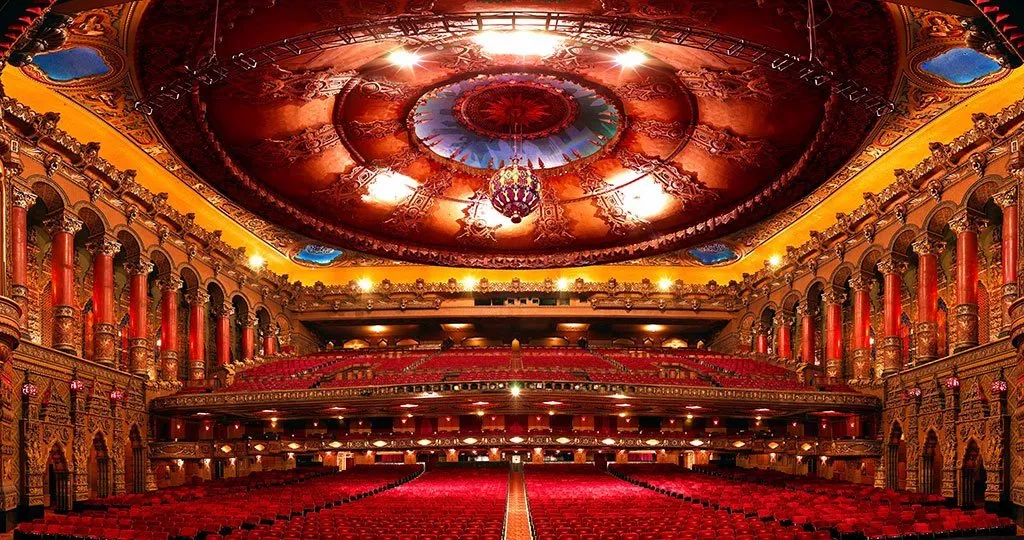 Photo: Fox Theatre, via dynamic-media-cdn.tripadvisor.com
The air conditioning alone was a draw. In an era before central cooling was standard in American homes, theaters advertised their chilled interiors as aggressively as they promoted the films themselves. Marquees sometimes read "20 Degrees Cooler Inside" as if that were the headline act. On a sweltering July afternoon, it practically was.
Nobody Checked the Showtimes
Here's the part that genuinely baffles modern audiences: for much of the classic Hollywood era, movies played on a continuous loop. There were no fixed showtimes in the way we understand them today. You bought your ticket, walked in whenever you arrived — mid-film, mid-scene, sometimes mid-sentence — watched until the story came back around to where you'd entered, and then decided whether to stay or leave.
The phrase "this is where we came in" was a genuine, functional part of the American vocabulary. Families would enter a theater at 2 p.m., catch the last forty minutes of a film, sit through the newsreel, the cartoon, the B-picture, and then watch the main feature from the beginning. By the time they emerged blinking into the late afternoon sun, three or four hours had quietly evaporated.
Double features — two full films for a single ticket price — were standard practice through much of the mid-century. Drive-ins frequently ran triple features. The expectation wasn't that you'd see one thing and leave. The expectation was that you'd stay awhile.
The Theater as Social Infrastructure
What made the old moviegoing ritual genuinely different wasn't just the architecture or the programming format. It was the role the theater played in American social life.
For teenagers, the local movie house was one of the few places to gather without adult supervision. For couples, it was a date that lasted long enough to actually talk about something afterward. For families, it was a shared event that anchored an entire Saturday. You didn't just consume a film — you experienced it communally, in a room full of strangers who laughed, gasped, and occasionally cried at exactly the same moments you did.
That shared emotional experience was the product. The film was almost secondary.
Neighborhood theaters were woven into the fabric of American towns the same way diners and barbershops were. They had regulars. Ushers who knew faces. Managers who'd slip kids in for free when business was slow. They were local institutions, not franchise locations.
What the Multiplex Traded Away
The shift began in the late 1960s and accelerated through the 1970s, when developers started carving single large theaters into several smaller screens. The multiplex promised variety and efficiency. What it quietly dismantled was atmosphere.
The gilded ceilings came down — or more accurately, got subdivided into eight identical boxes with identical seats and identical cup holders. Fixed showtimes replaced the continuous loop. Reserved seating, now standard at most major chains, turned the spontaneous afternoon trip into a scheduled appointment.
None of that is inherently bad. Efficiency is real. Comfort has genuinely improved. Modern theaters have reclining seats, Dolby sound, and food menus that would have seemed absurd to a 1955 usher. But something shifted in the cultural weight of the experience.
Streaming finished what the multiplex started. When every film is available on a screen in your living room within weeks of theatrical release — sometimes simultaneously — the urgency to go somewhere to see it evaporates. Cinema became content. The destination became a category.
What We Actually Lost
The honest answer is that we lost the ritual. Not just the architecture or the double features, but the shared agreement that going to the movies was worth an entire afternoon. That it deserved your full attention, your good clothes, and your willingness to sit in the dark with strangers and let a story wash over you without checking your phone.
The picture palaces are mostly gone now. A handful survive as performing arts centers or historic landmarks — the Fox in Atlanta, the Paramount in Oakland — preserved more as museums of a lost idea than as functioning parts of daily life.
But the idea itself is worth sitting with for a moment. There was an era when Americans built temples to storytelling and filled them every single week. When the movies weren't a content category or a streaming option — they were the event. The whole afternoon. The whole point.
That's a pretty wide chasm from where we're standing now.