A Shoebox Full of Your Entire Medical History: Raising Kids Before Digital Health Records
Somewhere in the back of a kitchen drawer, or tucked inside a baby book with a faded cover, millions of American adults still have their original childhood vaccination card. A small paper document, maybe the size of a folded index card, with a few handwritten dates and initials from a pediatrician's office that may or may not still exist.
That card was, for a very long time, the entire official record of one of the most medically significant periods of a human life.
Think about that for a second. The immunizations, the illnesses, the allergic reactions, the growth charts, the ear infections — all of it living in a piece of paper that could be destroyed by a flooded basement, lost in a move, or simply misplaced during the general chaos of raising children. That was the system. That was the whole system.
The Baby Book as Medical Archive
For American parents through most of the 20th century, tracking a child's health was a combination of personal record-keeping and institutional trust. The baby book — a commercial journal sold in gift shops and department stores — was the primary tool. Parents recorded first words, first steps, birthdays, and yes, doctor visits. Some were meticulous. Many were not.
Vaccination cards were issued by local health departments or pediatricians' offices and were the parent's responsibility to maintain. There was no central database, no digital registry, no automatic backup. If you lost the card, you called the doctor's office and hoped the paper file was still there and legible. If the practice had closed or the doctor had retired, you were often left with nothing but your own memory.
School enrollment required proof of immunization, which meant that lost cards created real, practical problems. Parents sometimes had children re-vaccinated simply because they couldn't prove the original shots had happened. It wasn't a rare edge case — it was a common enough occurrence that pediatricians had standard procedures for handling it.
The Single-Doctor System and Its Hidden Risks
For families lucky enough to have a consistent relationship with one pediatrician over many years, the system worked reasonably well. A good family doctor who had been seeing your child since birth carried an enormous amount of institutional knowledge in their own head and in a paper chart that lived in a filing cabinet in their office.
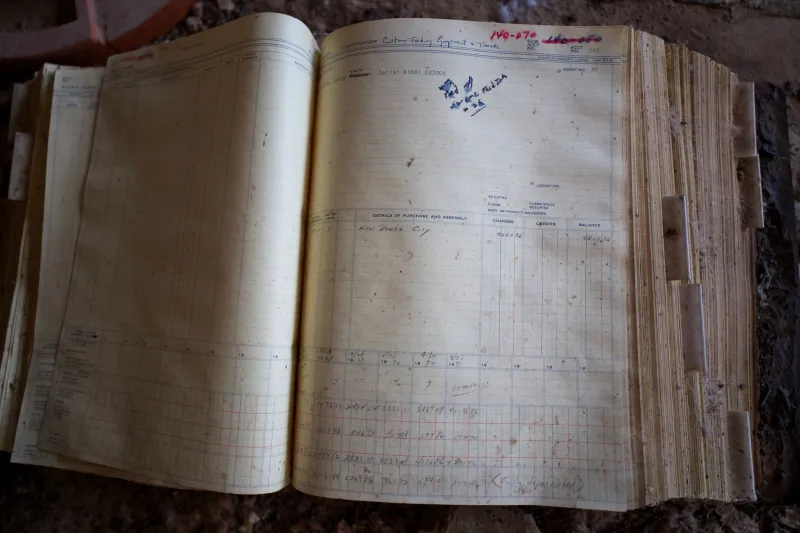
That chart was the backup. It was also the primary record, the secondary record, and the only record. If something happened to it — a fire, a flood, an office closure, a retirement — the information was simply gone.
And family circumstances didn't always cooperate. Americans move frequently. Military families, in particular, might have a child seen by a dozen different doctors across multiple states before that child turned ten. Each transition meant a new paper file, started from scratch, with whatever the parents could remember and whatever records had survived the previous move.
The gaps were real and sometimes consequential. A child's documented allergy to a specific antibiotic, noted by a pediatrician in one state, might not make it into the file of the next doctor in another state. The parent was the information carrier. The parent's memory was the system's most critical component.
What the Medicine Cabinet Didn't Know
Beyond the vaccination card and the paper chart, the monitoring of infant and child health was almost entirely reactive. If a baby seemed to be breathing normally and gaining weight, you assumed things were fine. If something seemed wrong, you called the doctor, described the symptoms as best you could, and waited for an appointment.
There were no wearable monitors. No sleep trackers. No devices that measured oxygen saturation or heart rate through the night and sent alerts to a parent's phone. The idea that a parent could know, in real time, that their infant's breathing had changed during sleep would have seemed like science fiction to a 1965 pediatrician.
Sudden Infant Death Syndrome — SIDS — was identified as a distinct medical phenomenon in the 1960s, but the tools to monitor infants for the warning signs that modern technology can now track simply didn't exist. Parents relied on instinct, on the advice of their own parents, and on the hope that checking the crib periodically through the night was enough.
It usually was. But the margin between "usually" and "always" is where the fragility of the old system lived.
The Infrastructure That Now Surrounds Childhood
Today's American parent operates inside a health infrastructure for their child that would be almost unrecognizable to a parent from 1960 — or even 1990.
Electronic health records mean that a child's complete medical history travels with them regardless of which pediatric practice they visit, which state they move to, or how many times their family changes insurance providers. Immunization registries maintained at the state level mean that vaccination records exist independently of whatever the parent has managed to hold onto.
Patient portals allow parents to review test results, request prescription refills, message their child's care team, and access appointment histories at any hour. Wearable infant monitors — devices that clip to a baby's clothing or sit beneath a crib mattress — track breathing patterns, sleep cycles, heart rate, and oxygen levels, sending data to a parent's phone and alerting them to anomalies.
None of this existed as recently as 25 years ago in any meaningful consumer form. Most of it has appeared within the last 15 years. The transformation is so complete and so recent that it's easy to forget it's a transformation at all.
The Invisible Weight of What We've Built
The interesting thing about modern childhood health infrastructure is how invisible it is when it's working. Parents today don't walk around thinking about the integrated data systems that make their child's medical history portable and permanent. They just open the app, check the portal, read the sleep report.
The old system's fragility was equally invisible — right up until it wasn't. Until the moment a parent sat in a new doctor's office in a new city and realized that everything the previous doctor had known about their child existed only in a filing cabinet 800 miles away, or in their own imperfect memory.
That shoebox full of documents — the baby book, the vaccination card, the discharge papers from the hospital where your child was born — wasn't a charming analog artifact. It was the entire medical record of a human being's most vulnerable years, held together by good intentions and a parent's best efforts.
The chasm between that system and the one we inhabit now is enormous. We just rarely stop to notice it.