The Album Was the Point: How Streaming Killed the Art of Actually Listening
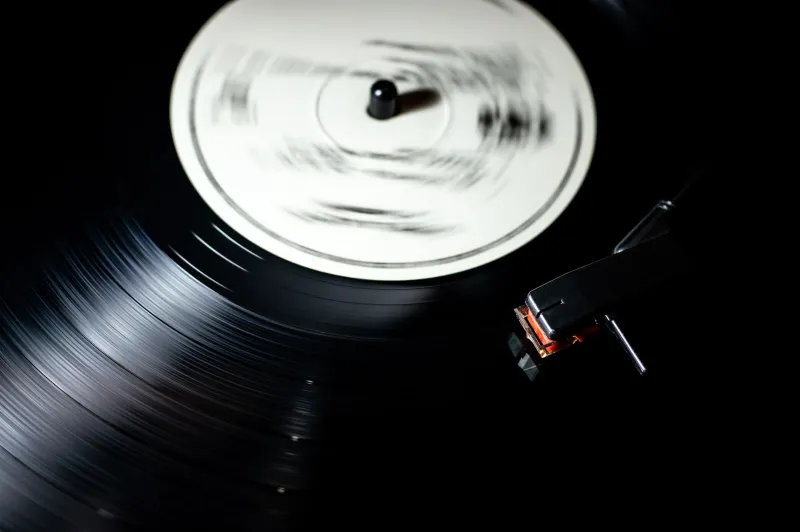
Picture this: you've just bought a new record. You carry it home like it's something fragile — because it is. You slide it out of the sleeve with two fingers pressed against the edges, avoiding the grooved surface the way you'd avoid touching a photograph. You set the needle down. And then you sit. You actually sit and listen.
For most people under thirty, that sequence of events sounds almost ceremonial. Quaint, even. But for a significant chunk of American life in the twentieth century, that was how you listened to music. Not as background noise. Not shuffled between forty other artists on a commute. As an event.
The chasm between that world and this one is wider than most of us stop to realize.
A Record Collection Was a Statement About Who You Were
Vinyl wasn't cheap. In the 1970s, a new LP could run you anywhere from four to eight dollars — which, adjusted for inflation, puts many albums in the fifteen-to-twenty-five dollar range today. That meant buying music was a decision. You didn't casually grab ten albums on a Tuesday afternoon. You chose carefully, maybe based on a recommendation from a friend, a review in Rolling Stone, or a single you'd heard on the radio enough times to convince yourself you needed the whole record.
And once you owned it, you protected it. Dust was the enemy. Direct sunlight warped records into gentle waves that made your turntable skip. A scratch — one careless drag of the needle — could ruin a passage of music permanently. There were no second copies waiting in the cloud. You either replaced the album or you lived with the skip, that tiny hiccup in the song you'd eventually start to hear as part of the music itself.
Collections were displayed. Alphabetized. Argued over. When you walked into someone's apartment in 1978 and scanned their record shelf, you were reading their personality in a way that a Spotify profile simply doesn't replicate.
Side A and Side B: The Album as Architecture
Here's something modern listeners rarely think about: the physical format of vinyl forced artists to think in two halves. Side A. Side B. Each side ran roughly twenty minutes, which meant an album wasn't just a collection of songs — it was a structured experience with a midpoint break built in.
Artists like Pink Floyd, Joni Mitchell, and Stevie Wonder didn't sequence their records randomly. They thought about emotional arcs, about how one song bled into the next, about where to place the intermission and what mood you'd be in when you flipped the record over. Albums like Rumours, Thriller, or Born to Run were designed to be consumed whole. Skipping tracks wasn't really the point — and physically, it was kind of a hassle anyway.
That context shaped how listeners understood music. You knew the album. Not just the hit. The deep cuts, the weird instrumental in the middle, the slow closer that felt like a comedown. You knew it because you'd heard it dozens of times in sequence, whether you meant to or not.
The Ritual Had Weight
There's a reason people who grew up with vinyl get a little misty-eyed when they talk about it. It wasn't just nostalgia for better sound (though plenty will argue that point). It was the ritual itself. The weight of the sleeve in your hands. The pop and hiss before the music started. The way you'd read the liner notes — lyrics, credits, thank-yous — because there was nothing else to do while the record played.
Music required your presence. It asked something of you. And that friction, that small investment of attention and care, made the experience mean more.
Compare that to today. The average Spotify user skips a song within the first thirty seconds if it doesn't grab them. Algorithms serve up personalized playlists that remove the element of discovery by making discovery frictionless. You never have to sit with a song that challenges you. You never have to wait through the slow build to get to the part that wrecks you. You just skip.
None of this is a moral failing. It's just what unlimited access does to attention.
What We Traded Away
Streaming is genuinely extraordinary. The idea that you can access virtually every song ever recorded, from anywhere, for roughly the cost of a single vinyl album per month — that's not nothing. It's actually kind of miraculous.
But something real was lost in the transaction. The scarcity of music gave it gravity. The physicality of records made them feel like possessions rather than utilities. And the effort required to listen — the care, the attention, the whole ritual of it — meant that music occupied a different place in people's lives. It was something you did, not just something that happened around you.
The next time a song genuinely stops you in your tracks, consider this: somewhere in America right now, there's a person who heard that same song for the first time on a Saturday afternoon, dropped the needle, and sat still for forty-five minutes straight. They weren't multitasking. They weren't building a playlist. They were just listening.
We used to be pretty good at that.