He Could Hear What Was Wrong: The Disappearing Art of the Mechanic Who Actually Knew Your Car
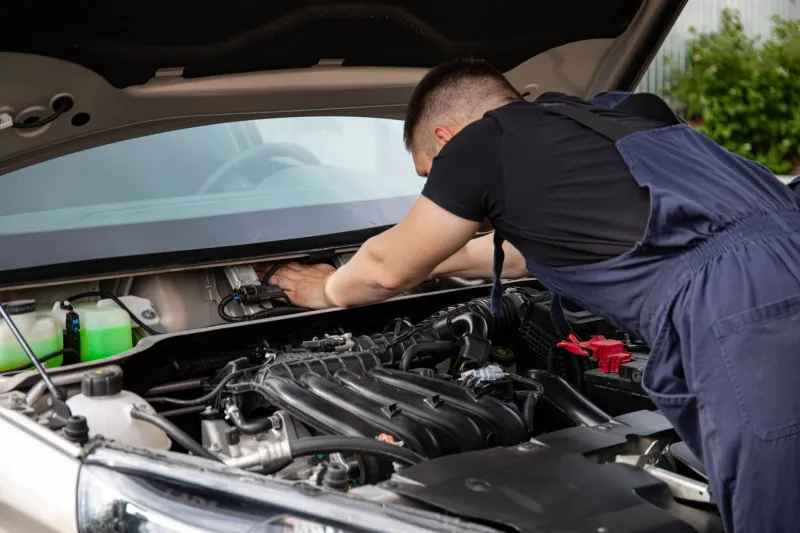
You'd pull into the lot, and before you'd even finished explaining the problem, he'd hold up a hand. Not rudely — just the way someone does when they've already heard enough. He'd walk around the car, crouch down, maybe give a tire a look. Then he'd say something like, "Let me hear it run." You'd start the engine. He'd stand there with his arms crossed, eyes somewhere in the middle distance, listening to something you couldn't hear. And then: "Yeah, it's your alternator."
That was the neighborhood mechanic. And in a very real way, he's gone.
The Shop on the Corner
For most of the twentieth century, American car culture ran on a network of small, independent repair shops. These weren't dealerships. They weren't chains. They were often one or two guys — sometimes a family operation — who'd been working on cars in the same building for decades. They knew their regulars. They knew their regulars' cars. And in many cases, they knew those cars better than the owners did.
The skill set required was tactile, experiential, and genuinely hard to teach in a classroom. A good mechanic learned to read a car through vibration, smell, sound, and sight. A particular knock meant one thing at idle and something entirely different under load. The color of exhaust smoke told a story. The feel of a brake pedal communicated more than most people realized. These were diagnostic tools that lived entirely inside the mechanic's head, built up over years of getting it right and getting it wrong.
And crucially, none of it required a computer.
What You Could Actually Understand
There's another dimension to this that tends to get overlooked: the cars themselves were comprehensible. Not easy to fix — but comprehensible. A motivated owner with a decent set of tools and a Chilton manual could change their own oil, replace brake pads, swap out a water pump, or diagnose a rough idle without any specialized equipment. The engine was a mechanical system with parts you could see, touch, and trace with your hands.
This created a whole culture of self-sufficiency around cars. Saturday morning in a suburban driveway, hood up, radio on, a neighbor wandering over to offer an opinion — this was ordinary American life for a long stretch of the twentieth century. People had opinions about carburetors. High school shop class actually produced skills that transferred directly to the driveway.
The relationship between an American and their car was intimate in a way that's now almost entirely severed.
The Day the Diagnostic Port Arrived
The shift didn't happen overnight, but there was a meaningful turning point. Starting in the mid-1990s, federal regulations required all new cars sold in the US to include a standardized OBD-II diagnostic port — a small socket, usually under the dashboard, that allowed computers to communicate directly with the vehicle's electronic control systems. By the early 2000s, modern cars had become rolling software platforms. Dozens of sensors. Hundreds of monitored parameters. Error codes that could only be read with a scanner.
The check engine light, which had existed in some form since the 1980s, transformed from a vague warning into a gateway to a system that required specialized tools and training to interpret. A blinking code might mean something simple or something catastrophic. Without the scanner, you genuinely couldn't tell.
The intuitive mechanic didn't disappear immediately. But his value proposition changed. The shop that once competed on expertise and trust now needed capital investment in diagnostic equipment, regular software updates, and increasingly, factory-specific tools that independent shops couldn't always afford. Dealerships gained a structural advantage. The corner garage started losing ground.
What We Lost on Both Sides of the Hood
The trade-offs here are real in both directions, and it's worth being honest about that.
Modern cars are, by most measurable standards, vastly more reliable than their predecessors. The average vehicle on American roads today is expected to last 200,000 miles with reasonable maintenance — a figure that would have seemed implausible in 1970. Electronic engine management has made cars more fuel-efficient, cleaner, and less prone to the kind of routine failures that used to strand drivers regularly. The old Saturday morning driveway ritual often ended in frustration, skinned knuckles, and a car that still didn't run right.
But something was exchanged in that bargain. The average American now drives a machine they fundamentally cannot understand, maintain, or repair. When something goes wrong, the only option is to plug in a device, read a code, and defer to a system neither the owner nor the technician fully controls. Many dealership technicians are honest about this: they're often interpreting what the software tells them rather than diagnosing the car themselves.
The trusted neighborhood mechanic — the guy who knew your '87 Buick's quirks, who'd tell you straight whether a repair was worth it, who'd sometimes wave you off and say "just keep an eye on it" — that figure is largely a relic. Not because the skills vanished, but because the machines stopped requiring them.
A Trust That's Hard to Replace
What made the old mechanic relationship valuable wasn't just technical competence. It was accountability and proximity. He was in your neighborhood. His reputation was local and personal. If he steered you wrong, you'd see him at the gas station on Tuesday. That social contract kept a lot of people honest.
The modern experience — dropping your car at a dealership, receiving a printed diagnostic report with line items you can't evaluate, and signing off on a repair you have no way to independently verify — operates on a completely different kind of trust. It's institutional trust, which is a different animal entirely.
Progress usually costs something. In this case, what it cost was a particular kind of human expertise, and the relationship that came with it. The car still gets fixed. But the conversation under the hood is over.