Strawberries in a Blizzard: The Quiet Revolution That Changed What Americans Eat
Walk into any grocery store in January and you'll find strawberries. Bright red, perfectly shaped, stacked in plastic clamshells like it's the middle of June. Nobody thinks twice about it. Nobody stops and wonders how a strawberry made it from a field in Chile to a shelf in Cleveland in the middle of a snowstorm.
That indifference is actually one of the most remarkable things about modern American life. Because for most of this country's history, what you ate for dinner was almost entirely determined by what was growing nearby — and what time of year it was.
What Winter Actually Tasted Like
In the 1950s and 1960s, the average American household operated on a kind of edible calendar. Spring brought asparagus and early greens. Summer was corn, tomatoes, peaches, and zucchini in quantities that bordered on oppressive. Fall meant apples, squash, and the start of root vegetable season. And then winter arrived, and the fresh produce largely disappeared.
What replaced it wasn't a trip to a well-stocked supermarket. It was the basement.
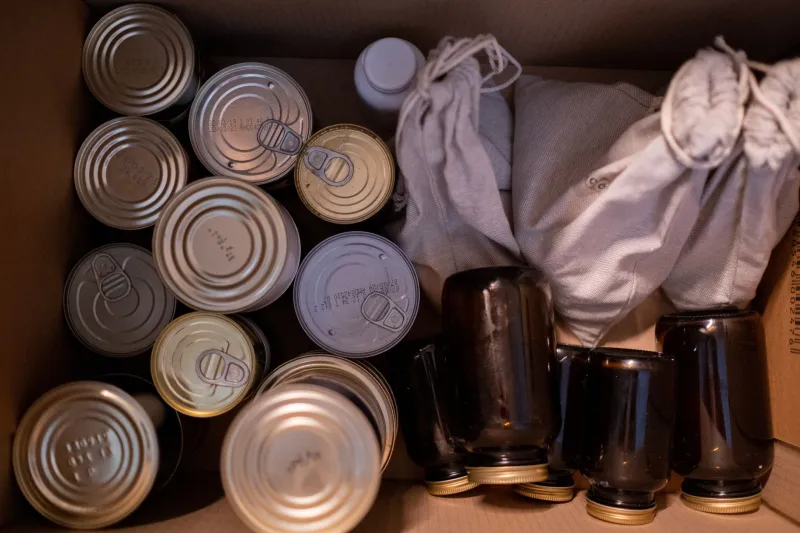
Families — especially in the Midwest and rural South — kept root cellars or cool basement corners stocked with potatoes, turnips, carrots, onions, and whatever had been canned during the summer harvest. Shelves lined with mason jars of green beans, stewed tomatoes, and peach preserves weren't a charming hobby. They were a survival strategy. A family that didn't put up enough food in August was going to have a lean February.
Canned goods from the grocery store filled in the gaps. Campbell's soup. Del Monte corn. Green Giant peas. These weren't convenience foods in the modern sense — they were the entire winter produce section for millions of American households. Dinner in January might be a pork roast with canned green beans and mashed potatoes from the last of the fall harvest. That was a good dinner. Nobody was complaining.
The Rhythm That Shaped Everything
What's easy to miss from today's vantage point is how deeply this seasonal constraint shaped the way Americans cooked, shopped, and thought about food.
Meals weren't built around a recipe you found online and then sourced ingredients for. They were built around what was available — or what your mother had canned in September. Home cooks didn't have the luxury of deciding on a Tuesday that they wanted a fresh tomato salad. They worked within a framework that the season imposed, and creativity happened inside those limits.
Preservation was a skill, not a pastime. Canning, pickling, smoking, and root cellaring were things women — and it was almost always women — learned out of necessity. The knowledge passed from mother to daughter not because it was sentimental, but because forgetting it had real consequences.
Shopping also worked differently. Families bought what was local and abundant because that's what existed and what was affordable. A bushel of peaches from a nearby orchard in August cost almost nothing. Those same peaches in February didn't exist at any price.
How the Walls Came Down
The transformation didn't happen overnight. It came in waves — refrigerated rail cars in the early 20th century, improved highway networks in the postwar era, air freight for premium produce, and eventually the truly global supply chains that emerged in the 1980s and 1990s as trade agreements opened up agricultural imports from Mexico, Chile, Peru, and beyond.
By the time the average American teenager in 1995 was old enough to grocery shop alone, the seasonal diet was already a fading memory. By 2005, it was practically ancient history.
Today, the American grocery store carries something in the neighborhood of 30,000 to 50,000 products. Avocados are available year-round. Mangoes arrive from Peru in February. Blueberries show up in December. Asparagus doesn't wait for spring. The produce section no longer reflects what's happening outside — it reflects what's happening on every continent simultaneously.
What We Gained, What We Lost
The gains are obvious and enormous. Food security improved dramatically. Nutrition became less dependent on geography and season. Families who couldn't grow or preserve their own food gained access to variety that previous generations never had. The sheer abundance of the modern American grocery store would have looked like pure fantasy to a housewife in 1962 staring at her winter-depleted pantry.
But something else happened too. The connection between food and place — and food and time — quietly dissolved.
When strawberries appear in every month of the year, they stop meaning anything special. The first tomato of August no longer carries that particular joy it once did, because tomatoes were available in March too, flown in from somewhere warmer. Seasonal eating created anticipation, and anticipation made things taste better. Ask anyone who grew up eating corn picked from a backyard garden in July whether supermarket corn in November compares. They'll give you an answer pretty quickly.
The other casualty is knowledge. Most Americans under 40 have no idea how to can vegetables, identify what's actually in season locally, or cook around an ingredient's natural availability. Those skills aren't gone — there's a whole farmers market movement built around recovering them — but they've moved from necessity to niche interest.
The Season Is Still Out There
Here's the thing: the seasons didn't stop. Strawberries still peak in June. Tomatoes still taste best in August. Butternut squash is still a fall vegetable, even if you can buy it in April.
The difference is that the grocery store no longer tells you any of that. It's hidden behind a curtain of perpetual availability, where everything is always there and nothing is ever particularly urgent.
For most of American history, dinner was a negotiation between the cook and the calendar. That negotiation shaped recipes, habits, family traditions, and the entire rhythm of domestic life. The global supply chain ended that negotiation almost completely — and the average American didn't even notice it was happening.
That's the quiet part of the food revolution. Not what we gained on the shelves, but what we stopped thinking about entirely.