One Newspaper, One Broadcast, and Somehow Everyone Stayed Calm: The Era Before Notification Overload
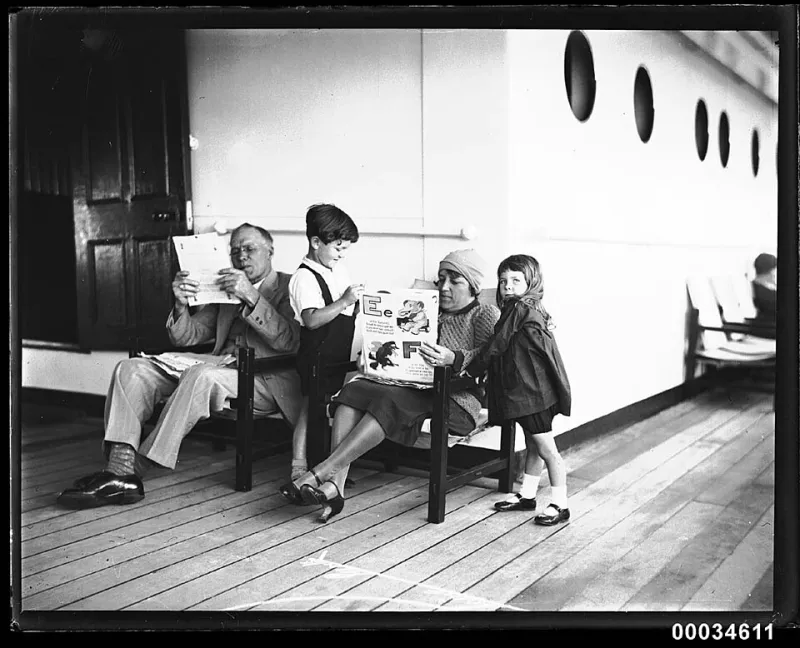
Photo: Australian National Maritime Museum on The Commons, No restrictions, via Wikimedia Commons
Picture a Tuesday morning in 1962. You wake up, walk to the front door, pick up the newspaper, and sit down with a cup of coffee. You read for twenty minutes. You fold the paper. You go to work. At 6:30 in the evening, you sit down again and watch Walter Cronkite tell you what happened in the world today — all of it, in thirty minutes flat, including commercials.
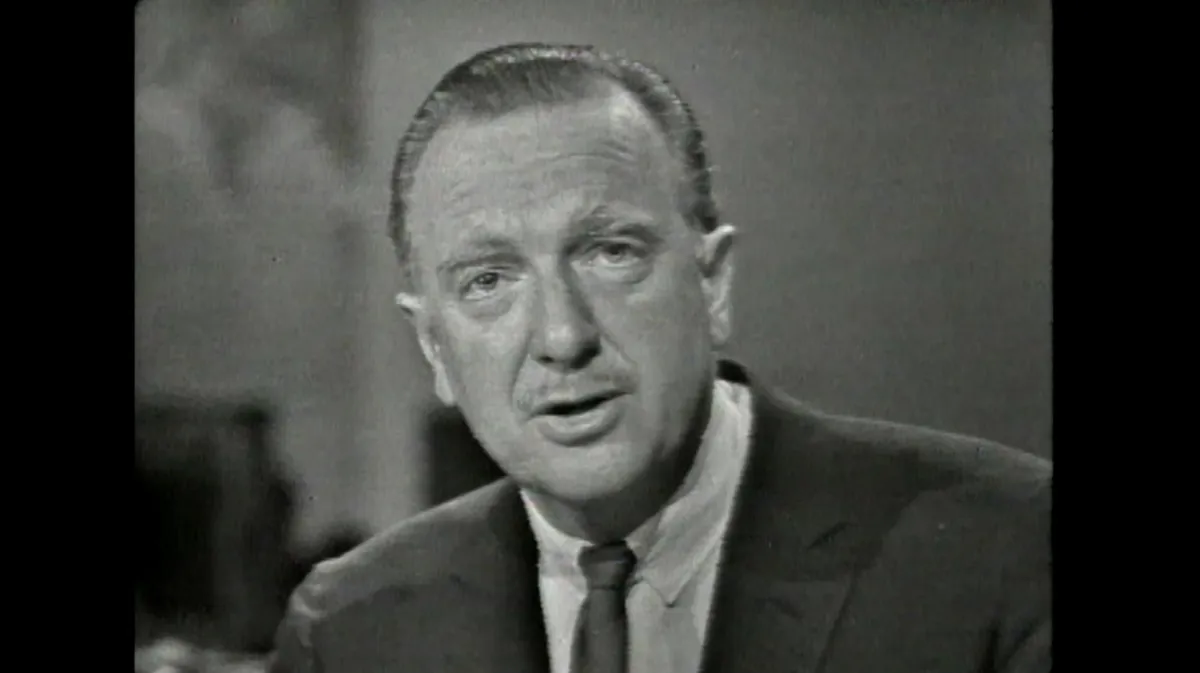 Photo: Walter Cronkite, via m.media-amazon.com
That was the news cycle. That was the whole thing.
Now picture a Tuesday morning in 2024. Your phone buzzes before your alarm goes off. By the time you've brushed your teeth, you've absorbed a breaking story from overseas, two opinion pieces about it, a counter-narrative, and a notification telling you something else entirely has just happened. And the day hasn't started yet.
The chasm between those two mornings is one of the most dramatic shifts in American daily life — and its effects run deeper than most people appreciate.
The Architecture of the Old Information World
The daily newspaper dominated American information consumption for the better part of a century. At its peak in the early 1970s, roughly 62 million newspapers were sold every single day in the United States, reaching about 78 percent of American adults. People subscribed to a single paper — usually their local one — and trusted it to curate what mattered.
The evening network news broadcast, which launched in its modern form in the early 1960s, added a second daily touchpoint. NBC, CBS, and ABC each ran thirty-minute programs at roughly the same time each evening. Every anchor covered the same stories. There was no choosing your own reality, no algorithm feeding you content that confirmed what you already believed. Everyone watched the same broadcast.
This wasn't a media landscape built for speed. It was built for completeness. Stories were reported, edited, verified, and published on a schedule. The rhythm of the news cycle matched the rhythm of human attention — morning intake, evening review, and everything else in between was just living your life.
Why People Felt More Informed, Not Less
Here's the counterintuitive part: surveys from the mid-twentieth century consistently showed that Americans felt well-informed about national and world events. Gallup polling from the 1960s found high levels of confidence in the news media and strong self-reported civic awareness.
The reason, most media researchers now believe, is that the old system was designed to conclude. A newspaper article had an end. A thirty-minute broadcast had a sign-off. Cronkite's famous closing line — "And that's the way it is" — wasn't just a catchphrase. It was a structural feature of the format. It told viewers: you now know what happened today. You can go live your life.
Today's news environment has no such closure. There is no sign-off. There is no moment when the information stops. Push notifications arrive during dinner, during sleep, during conversations with your children. The news is never finished because the platforms that deliver it are financially incentivized to keep you engaged indefinitely. Completion is bad for business.
The Anxiety That Came With the Avalanche
The 24-hour cable news era arrived with CNN in 1980, and the logic of continuous broadcasting required something the old model didn't: constant content. When nothing dramatic was happening, the format still needed to fill airtime. The solution was to make everything feel urgent, to amplify conflict, to keep the temperature elevated.
By the time smartphones arrived and social media matured into a news distribution platform, the volume problem had gone exponential. The American Psychological Association began tracking what it called "news fatigue" in its annual Stress in America surveys. By 2017, 56 percent of Americans reported that following the news caused them significant stress. By 2020, that number had climbed higher still.
The problem isn't that people are consuming more information — it's that the information is arriving in a form specifically engineered to provoke emotional responses. Anger, fear, and outrage are the emotions that drive engagement on social platforms. The old newspaper didn't optimize for outrage. It optimized for accuracy and completeness, because those were the things that kept subscribers paying.
What the Slow News World Actually Looked Like
It's tempting to romanticize the mid-century news era, but it had real limitations worth acknowledging. Stories that didn't fit the dominant narrative — civil rights abuses, environmental disasters, corporate malfeasance — were routinely underreported or ignored entirely. The gatekeepers of information were overwhelmingly white, male, and concentrated in a handful of East Coast newsrooms. Diverse voices were structurally excluded.
And the thirty-minute evening broadcast, for all its clarity and calm, was also a profoundly simplified version of reality. Complex international stories got ninety seconds. Local issues rarely made the cut. The sense of completeness it offered was partly an illusion — a carefully edited version of the world that left enormous amounts out.
But the core design principle — that information should be curated, contextualized, and delivered in a format with a beginning and an end — was sound. It respected the limits of human attention. It assumed that people had lives to live outside of the news cycle.
The Notification We Actually Need
A growing number of researchers, journalists, and media critics have begun arguing for a return to something like the old model — not the gatekeeping or the exclusions, but the rhythm. The idea that checking the news twice a day, deliberately, from trusted sources, and then putting it down is not ignorance. It's a rational response to a media environment that was never designed with your wellbeing in mind.
The era of the single folded newspaper wasn't perfect. But it understood something that the notification economy has forgotten entirely: that knowing what happened in the world today should leave you feeling equipped to engage with it — not exhausted before you've even gotten out of bed.