Volume Q Through S and a Prayer: What It Really Meant to Grow Up With an Encyclopedia
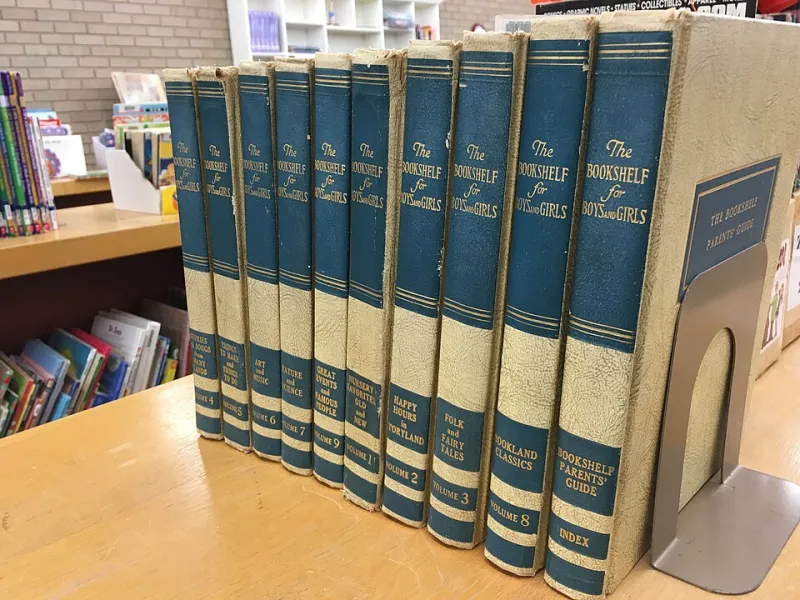
Photo: Texas State Library and Archives Commission from Austin, TX, United States, CC BY 2.0, via Wikimedia Commons
Somewhere in the living rooms of mid-century America, between the console television and the family Bible, sat a set of books that represented something larger than their contents. Twenty-four volumes, dark spines stamped in gold lettering, arranged in alphabetical order on a dedicated shelf that the family had probably bought alongside them. The encyclopedia.
If you grew up in a home that had one, you understood the unspoken weight of it. Those books cost real money — sometimes more than a month's mortgage payment — and they were treated accordingly. You didn't stack things on top of them. You didn't leave them open face-down. And when a homework question arose, you went to them first, with the quiet hope that the answer existed somewhere between their covers.
The Salesman at the Door
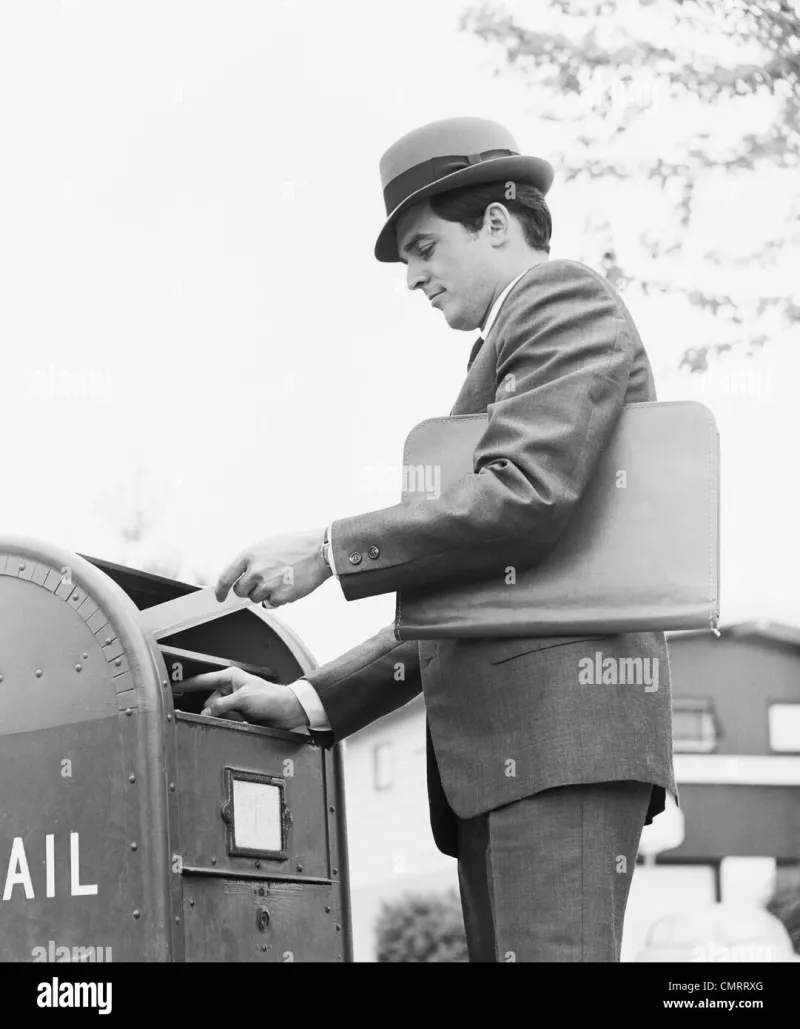
For many families, the encyclopedia arrived via a door-to-door salesman — a figure so common in postwar American life that he became a cultural archetype. These salesmen were trained, persistent, and skilled at a particular pitch: the encyclopedia wasn't a luxury. It was an investment in your children's future. Buying one was what responsible parents did.
The financial reality was significant. A full set of Britannica or World Book in the 1960s could cost anywhere from $200 to $400 — equivalent to well over $1,500 to $3,000 in today's dollars. Many families bought on installment plans, paying monthly for a set of books that would, theoretically, serve the household for decades. Some salesmen sweetened the deal with annual yearbooks — supplemental volumes designed to update the set — which added ongoing cost but also acknowledged the fundamental problem with the product: the world didn't stop changing just because the printing press did.
 Photo: World Book, via www.worldbookday.com
The purchase was an act of aspiration as much as practicality. Families who couldn't easily afford encyclopedias sometimes bought them anyway, because having them on the shelf meant something. It meant you were the kind of family that valued education. It meant your children would have resources. In a culture that deeply associated upward mobility with access to knowledge, the encyclopedia was a visible symbol of intent.
The Information That Time Forgot
Here's the quiet problem nobody liked to discuss: by the time an encyclopedia reached your shelf, it was already partially wrong.
The research, writing, editing, and printing process took years. A set published in 1962 might contain information gathered in 1959 or 1960. Population figures were outdated. Political maps showed borders that had already shifted. Scientific entries described theories that had since been revised. The entry for space exploration in a 1960 encyclopedia couldn't mention the moon landing that would happen nine years later — obviously — but it also couldn't mention Sputnik if it had gone to print before 1957.
For most everyday homework questions, this lag didn't matter much. The speed of light hadn't changed. Shakespeare's birth year was still 1564. But for anything touching current events, geography, politics, medicine, or science, the encyclopedia's information existed in a kind of permanent amber — preserved, authoritative-looking, and quietly obsolete.
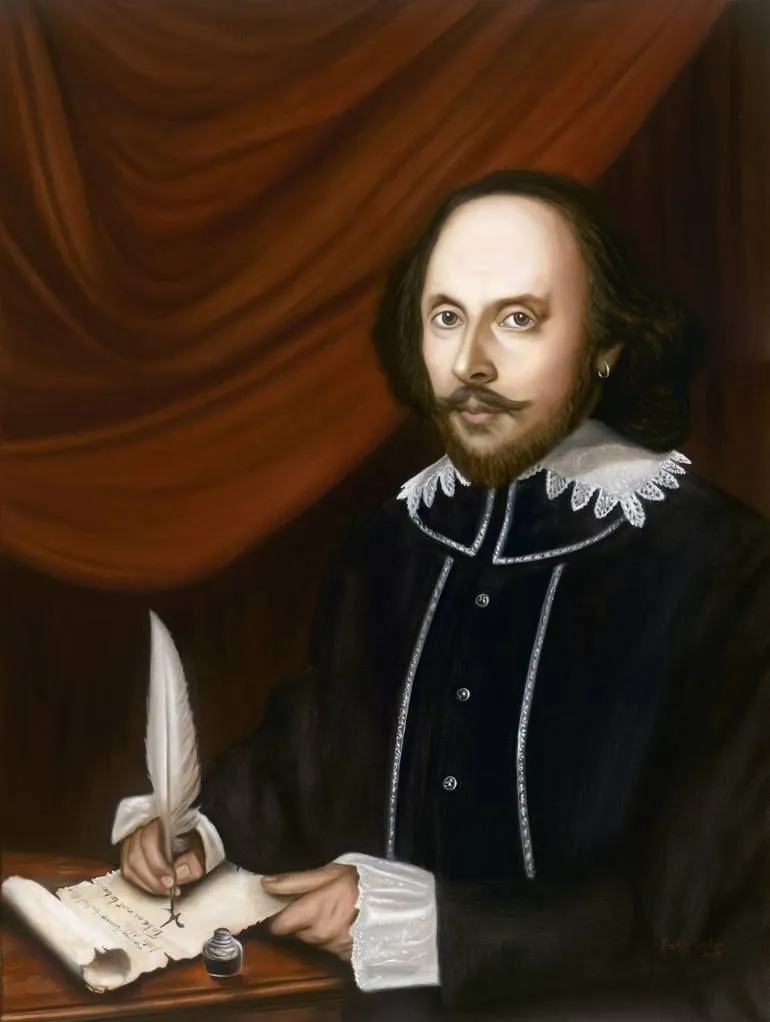 Photo: Shakespeare, via i.pinimg.com
Kids learned to navigate this limitation in ways they didn't fully articulate. You knew, instinctively, that the encyclopedia was reliable for history and unreliable for anything that might have happened recently. You cross-referenced when you could. You added mental footnotes: this was true when this was printed, but check the yearbook.
The Gaps Between the Letters
Then there were the questions that fell through the cracks entirely.
Every set had gaps — topics too niche, too recent, or too contested to earn an entry. If your question happened to land in one of those gaps, the encyclopedia offered nothing. You could read adjacent entries, triangulate from related information, and make an educated guess. Or you could accept that you simply didn't know, and file the question away until a library visit became possible.
The library was the backup system. School librarians were the human search engines of their era — professionals who knew where information lived and could help you find it. A serious research project required a trip, a card catalog, and time. For straightforward questions, that investment wasn't always practical. Some things just stayed unknown.
This was a fundamentally different relationship with information than anything that exists today. Uncertainty wasn't a momentary state you resolved in thirty seconds on your phone. It was sometimes a permanent condition. You got comfortable not knowing things, because the alternative — knowing everything — wasn't available.
The Cost of Static Knowledge
Looking back, the encyclopedia represents something worth pausing on: the enormous financial and intellectual investment families made just to access a fixed, limited slice of human knowledge. Parents spent thousands of dollars in today's terms for information that was already aging. Children learned to work within boundaries that were invisible but real.
Today, a ten-year-old with a cheap tablet has access to more information than every encyclopedia ever printed, updated in real time, searchable in seconds, and available in dozens of languages. The gap between that reality and the one those families navigated is genuinely staggering.
But there's something worth acknowledging in the old way too. Those families valued knowledge enough to pay for it sacrificially. The books on the shelf said: information matters in this house. The medium was limited. The intention behind it wasn't.
The encyclopedia couldn't keep up with the world. Nothing printed ever could. But for a long time, it was the best approximation of the world that most American homes could afford to own — and families treated it like the treasure it was, even when its edges showed.