When Your Neighbor Was Your LinkedIn: How Americans Found Work Through Sunday Morning Connections
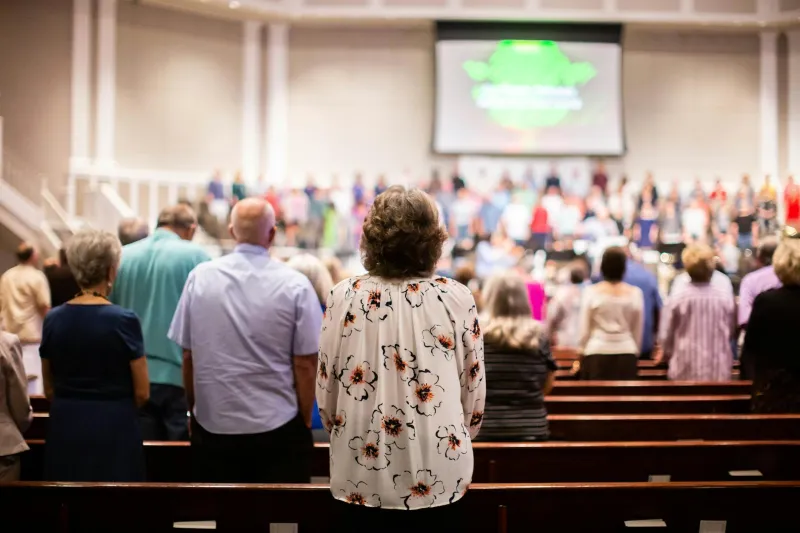
The Sunday Morning Job Market
Every Sunday after service, the real networking began. While families lingered outside First Methodist or St. Mary's, conversations inevitably turned to work—who was hiring, whose son needed a job, which foreman was looking for reliable help. This wasn't casual small talk; it was America's primary job placement system.
 Photo: St. Mary's, via stmaryscathedral.org.au
 Photo: First Methodist, via firstmethodistchurchfayette.org
In the decades before LinkedIn profiles and applicant tracking systems, finding employment was deeply woven into the social fabric of American communities. Your church pew, neighborhood barbecue, or Friday night bowling league weren't just social activities—they were your career development network.
When Geography Was Your Resume
Living on the right side of town could be more valuable than having the right degree. In manufacturing cities across the Midwest, certain neighborhoods were pipeline feeders to specific factories. Growing up on Oak Street meant your father probably worked at the steel plant, which meant you'd likely get a chance there too, assuming you stayed out of trouble and showed up when asked.
This geographic employment system created multi-generational workplace dynasties. Entire families would work for the same company, with fathers training sons, uncles vouching for nephews, and family reputations serving as the primary reference check. The Johnsons were known as reliable workers at Ford, the Kowalskis had been with General Electric for three generations, and everyone knew the O'Briens could fix anything mechanical.
The Power of the Recommendation
A word from the right person carried more weight than any resume. When Tom Miller from down the street mentioned to his supervisor that his neighbor's boy was looking for work, that casual conversation often carried more influence than formal applications from strangers. These weren't nepotistic schemes—they were practical solutions to hiring challenges in an era when background checks meant asking around the neighborhood.
Employers trusted these personal recommendations because community members had skin in the game. If you vouched for someone who turned out to be unreliable, your own reputation took a hit. This created a self-policing system where community members were careful about who they endorsed.
The Corner Store Career Center
Long before job boards, information about opportunities spread through informal networks centered around daily gathering places. The corner barbershop, local diner, and neighborhood tavern served as unofficial employment offices where regular customers shared information about openings, layoffs, and which companies were expanding.
These conversations were rich with insider knowledge that no formal job posting could provide. You'd learn which supervisors were fair, which departments had the best overtime opportunities, and which companies actually promoted from within. This intelligence network helped workers make informed decisions about where to apply their limited time and energy.
When Showing Up Was the Interview
Many jobs were secured not through formal interviews but through demonstrated character over time. If you helped your elderly neighbor with yard work, coached Little League on weekends, or were known for showing up reliably to church functions, these behaviors served as an extended job interview that lasted months or years.
When opportunities arose, employers often already knew who they wanted to hire based on community reputation. The formal application process was sometimes just a bureaucratic formality for positions that had already been mentally filled based on personal observations and community feedback.
The Limitations of Connection-Based Hiring
This system worked well for those with established community ties, but it created significant barriers for newcomers, minorities, and anyone outside the dominant social networks. If your family wasn't part of the right church, if you lived in the wrong neighborhood, or if your background didn't align with the community's demographic majority, accessing good jobs became exponentially more difficult.
Women faced particular challenges in this system, as many of the key networking venues—taverns, men's clubs, and certain social organizations—were exclusively male spaces. Professional opportunities for women often depended on family connections or the few female-dominated networks that existed, primarily through churches and social clubs.
The Apprenticeship of Observation
Young people entering the workforce learned about careers through direct observation rather than career counselors or online research. Watching your father leave for work every morning, hearing dinner table conversations about workplace challenges, and occasionally visiting job sites gave teenagers concrete understanding of what different careers actually involved.
This intimate knowledge of work life helped young people make more informed career choices, but it also limited their aspirations to what they could observe in their immediate community. A kid in a steel town learned about working steel; a farmer's son understood agriculture. Careers outside the local economy remained largely invisible and therefore unattainable.
When Loyalty Was Currency
The connection-based hiring system created strong bonds between workers and employers that extended beyond simple economic transactions. When your neighbor recommended you for a job, you owed loyalty not just to the company but to the person who vouched for you. This created workplace cultures where long-term employment was expected and valued by both parties.
Companies invested in training workers they expected to keep for decades, and employees felt genuine obligations to perform well for employers who had taken chances on them based on community recommendations. This mutual loyalty created stable employment relationships that are increasingly rare in today's economy.
The Digital Disruption
The rise of online job boards, professional networking sites, and applicant tracking systems fundamentally changed how Americans find work. What was once a deeply personal process became increasingly algorithmic and impersonal. Today's job seekers can apply to dozens of positions in an hour, but they've lost the insider knowledge and personal advocacy that community-based hiring provided.
Modern hiring processes are more transparent and theoretically more fair, but they've also become more competitive and anonymous. A resume might be reviewed by software before any human sees it, and hiring decisions often happen without any personal connection between employer and candidate.
What We Gained and What We Lost
Today's employment landscape offers unprecedented access to opportunities regardless of geography or social connections. A programmer in rural Montana can work for a company in San Francisco, and job seekers can research potential employers extensively before applying. The barriers that once excluded people from opportunities based on community connections have largely been dismantled.
However, something valuable was lost in the transition. The personal knowledge of character, the community accountability, and the long-term relationships that defined the old system created workplace cultures that many Americans now remember fondly. When hiring was personal, work relationships often were too.
The contrast between then and now reveals how profoundly technology has changed not just how we find jobs, but how we think about work itself. What was once a community-based system of mutual obligation and personal reputation has become a market-driven process of individual competition and algorithmic matching.
In our rush to create more efficient and equitable hiring systems, we may have lost something essentially human about how Americans once connected their working lives to their community lives. The Sunday morning job market may have been imperfect, but it recognized that work is ultimately about relationships between people, not just matches between skills and requirements.