When Your Doctor Actually Knew Your Middle Name: The Vanishing Art of Unhurried Healthcare
The Appointment That Started Three Weeks Ago
In 1975, calling your family doctor's office was like trying to get tickets to a sold-out concert. The receptionist would flip through a worn appointment book, her pen hovering over dates that seemed impossibly far away. "How about Thursday the 18th at 2:30?" she'd ask, as if scheduling a minor diplomatic summit.
You'd pencil it into your calendar, request time off work, and spend the intervening weeks wondering if that persistent cough was worth the elaborate production you'd set in motion. There was no WebMD to consult, no symptom checker app to provide instant reassurance or escalating panic. You simply waited, trusting that whatever was wrong could hold on for another two and a half weeks.
Today, you can video chat with a doctor while standing in line at Starbucks. Urgent care clinics promise to see you within the hour. Same-day appointments are not just possible but expected. The very idea of waiting three weeks to discuss a health concern feels almost medieval.
The Waiting Room as Social Institution
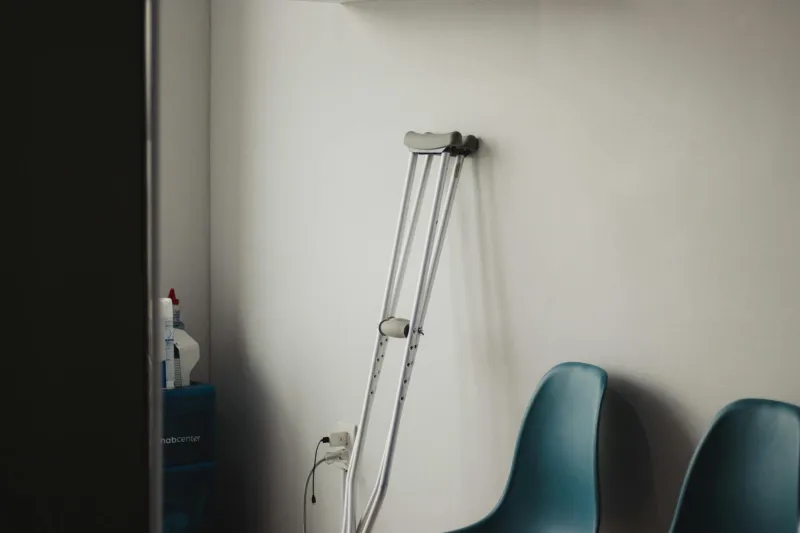
The waiting room of yesteryear was its own ecosystem. Families would arrive early—not because they were eager, but because showing up late meant starting the whole process over again. Children fidgeted with the same dog-eared copies of Highlights magazine while adults performed the delicate dance of avoiding eye contact while secretly diagnosing each other's visible ailments.
These rooms were studies in patience and resignation. The magazines were always six months old, the coffee was always terrible, and the fish tank—if there was one—always had at least one fish floating at the top that nobody wanted to mention. You'd sit there for what felt like geological ages, watching the hands of a wall clock move with the enthusiasm of a government bureaucrat.
The receptionist would occasionally emerge to announce that "the doctor is running a little behind," which everyone understood to mean "abandon all hope of keeping your afternoon plans." But you stayed, because this was simply how healthcare worked. The doctor's time was precious; yours was apparently infinite.
Modern urgent care centers have obliterated this social ritual. You check in on a tablet, get a text when it's your turn, and spend your wait time doing literally anything else. The efficiency is remarkable, but something communal has been lost—a shared experience of collective waiting that once bonded strangers in their mutual vulnerability.
When Bills Were Mysteries and Insurance Was Simple
Perhaps nothing illustrates the transformation more than the financial experience. In the old days, you'd see your doctor, pay a modest fee at the front desk, and submit a simple form to your insurance company. The whole transaction was transparent, predictable, and concluded before you left the building.
Insurance was often provided by a single company that covered entire communities. Your employer might have a deal with Blue Cross, and that was that. Everyone knew the rules because there was only one set of rules. Deductibles were low, co-pays were standard, and the phrase "out-of-network" hadn't yet entered the American vocabulary.
Today's healthcare billing resembles a complex financial instrument more than a simple service transaction. You might receive bills weeks or months after your visit, often for amounts that seem to have been determined by throwing darts at a board. Insurance networks change constantly, and figuring out what's covered requires a degree in forensic accounting.
The Family Doctor Who Actually Knew Your Family
Dr. Peterson knew that your mother had struggled with high blood pressure, that your father's side of the family had a history of heart disease, and that you'd broken your arm falling off your bike when you were seven. He'd delivered half the babies in town and had watched entire families grow up in his examining rooms.
This wasn't just medical history—it was institutional memory. Your doctor understood the context of your life, the patterns of your health, and the subtle changes that might indicate something significant. When he asked how you were feeling, he meant it in every sense.
Today's healthcare system prioritizes efficiency over continuity. You might see a different provider each time you visit, each one starting fresh with your chart, asking the same questions, and making the same discoveries. The convenience is undeniable, but the loss of that longitudinal relationship represents something irreplaceable.
The Speed of Modern Symptoms
We've gained incredible diagnostic capabilities and lost the art of patience. A rash that once would have been observed for a week before warranting medical attention now triggers an immediate Google search, followed by a same-day appointment, followed by a specialist referral—all within 48 hours.
This isn't necessarily bad; early intervention saves lives. But it's created a healthcare culture where every symptom feels urgent, where the normal variations of human health are treated as problems requiring immediate solutions. We've optimized for speed and convenience, and in doing so, we've perhaps lost some wisdom about the natural rhythms of healing and recovery.
What We've Gained and Lost
Modern healthcare delivers remarkable convenience and capability. You can get antibiotics for a sinus infection without missing work, consult with specialists across the country via video call, and access your complete medical history from your smartphone. The system serves our immediate needs with unprecedented efficiency.
But efficiency isn't everything. The old model, for all its inconveniences, fostered patience, built relationships, and created space for the kind of careful observation that sometimes reveals more than any diagnostic test. In our rush to make healthcare faster and more convenient, we may have inadvertently made it less human.
The waiting room, it turns out, wasn't just an inefficiency to be optimized away. It was where we learned that healthcare—like healing itself—sometimes requires time, patience, and the simple presence of other people who understand that being unwell is part of being human.