When Breaking Up Required Breaking the Bank: The Pre-1970s Divorce Maze That Trapped American Couples
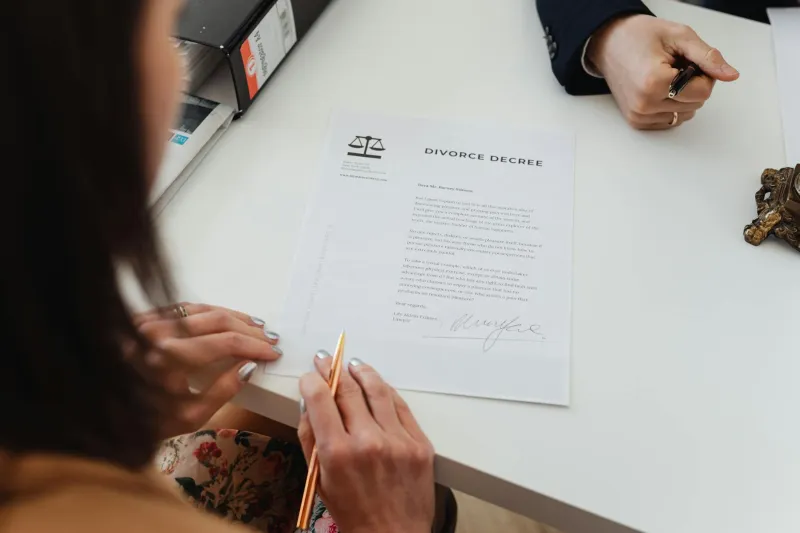
The Theater of Legal Fiction
In 1965, if Sarah and Tom from suburban Chicago wanted to end their marriage—even if they both agreed it wasn't working—they couldn't simply file papers and move on with their lives. Instead, they'd need to prove that one of them was guilty of something terrible enough to justify dissolving their union in the eyes of the state.
This wasn't just bureaucratic inconvenience. This was the reality of American divorce law before the no-fault revolution swept the country starting in 1969. Getting divorced required what amounted to a legal performance, complete with evidence, witnesses, and often elaborate staging to satisfy judges who held the power to decide whether your personal unhappiness was legally sufficient.
The Guilty Party System
Before no-fault divorce, American courts recognized only specific grounds for ending a marriage: adultery, abandonment, cruelty, or in some states, alcoholism or imprisonment. If you couldn't prove one of these fault-based reasons, you simply couldn't get divorced—regardless of how miserable both parties might be.
This created a bizarre legal marketplace where couples who mutually wanted to separate had to manufacture evidence of wrongdoing. Private investigators thrived by documenting staged infidelities. Hotels rented rooms specifically for divorce photography sessions, where one spouse would pose in compromising situations with hired actors to create "evidence" of adultery.
The most common performance involved hiring a woman to visit the husband's hotel room, then having a photographer burst in to capture the "affair." These staged encounters were so routine that some hotels advertised their services specifically for divorce proceedings, and certain actresses made their living as professional co-respondents.
The Lawyer Tax on Love Gone Wrong
Every divorce required legal representation—there was no such thing as a simple, self-filed dissolution. Attorney fees often consumed months of average household income, making divorce a luxury many working-class families simply couldn't afford. A typical divorce in 1960 cost between $500 and $1,500—equivalent to roughly $5,000 to $15,000 today—just in legal fees, before accounting for the detective work needed to build a fault-based case.
Lawyers specialized in divorce theater, knowing exactly how to present evidence and coach clients through testimony that would satisfy particular judges. Some attorneys maintained relationships with private investigators and even maintained lists of willing co-respondents for staging adultery cases.
The Waiting Game and Social Shame
The legal process could stretch for years. Courts required lengthy separation periods in many states, and contested cases dragged through multiple hearings. During this limbo, neither party could remarry, and the social stigma of being "involved in divorce proceedings" followed both spouses through their communities.
Women faced particular challenges, as they often lost financial support during lengthy proceedings and had limited earning opportunities. Many stayed in unhappy marriages simply because they couldn't afford the legal battle or the social consequences of being a divorced woman in mid-century America.
The Nevada Escape Hatch
For those with means, Nevada offered an escape route. The state's six-week residency requirement made Reno the "divorce capital of America." Wealthy Americans would relocate temporarily to establish Nevada residency, then file for divorce under the state's more liberal laws.
This created a two-tiered system where the wealthy could buy their way out of bad marriages by spending six weeks at a Reno ranch, while working-class couples remained trapped by legal and financial barriers.
The No-Fault Revolution
California changed everything in 1969 when Governor Ronald Reagan signed the nation's first no-fault divorce law. The concept was revolutionary: couples could end their marriage simply by citing "irreconcilable differences," without proving anyone had done anything wrong.
The change swept across America with surprising speed. By 1985, every state except New York had adopted some form of no-fault divorce. (New York finally joined in 2010, becoming the last holdout.)
Today's Streamlined Reality
Modern divorce, while never pleasant, bears little resemblance to the elaborate legal productions of the pre-1970s era. In most states, couples can file jointly for uncontested divorce, often completing the process online without ever seeing the inside of a courtroom.
The average uncontested divorce today costs between $500 and $1,500 total—roughly what legal fees alone cost in 1960. Many couples handle simple divorces entirely through online services or self-filing, paying only court fees.
The shift reflects a fundamental change in how American society views marriage and personal autonomy. Where the state once demanded proof of moral failing to grant divorce, it now generally accepts that relationships sometimes end and adults should be free to make that choice.
The Chasm Between Then and Now
The transformation reveals how dramatically American attitudes toward personal freedom, privacy, and the role of government have evolved. What once required elaborate legal theater, expensive attorneys, and often years of proceedings can now be accomplished with a few forms and a modest filing fee.
This legal evolution reflects broader cultural shifts around individual rights, gender equality, and the boundaries between public law and private life. The America that once required you to prove your spouse's guilt to escape an unhappy marriage now generally trusts adults to make their own decisions about their most intimate relationships.
The era when divorce required a legal performance may seem like ancient history, but it ended within living memory—a reminder of how quickly fundamental aspects of American life can transform.