Paper Maps and Parental Panic: When American Families Drove Into the Unknown
The Kitchen Table War Room
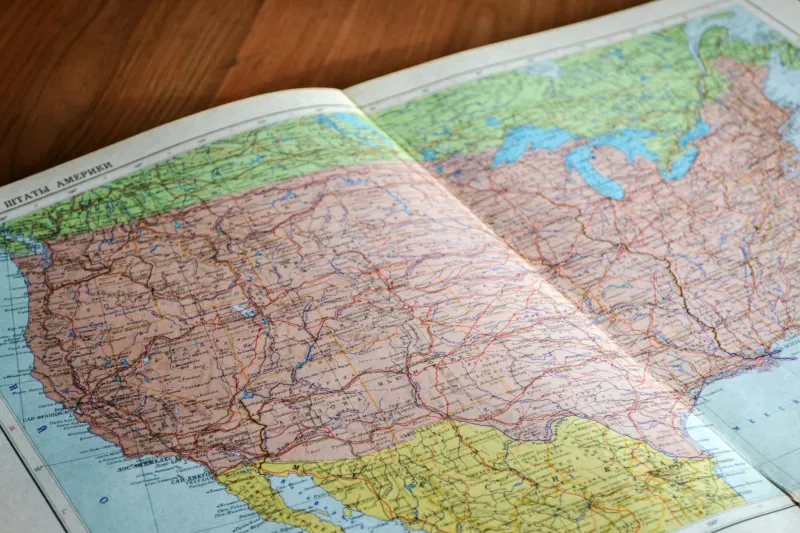
Every summer vacation began the same way in American homes before the year 2000: Dad spread the road atlas across the kitchen table like a general planning an invasion. Mom circled rest stops with a red pen. Kids traced the route with their fingers, calculating how many states they'd cross and whether they'd see mountains or deserts.
This wasn't casual trip planning. This was strategic preparation for venturing into the void, because once you backed out of the driveway, you were essentially flying blind until you reached your destination. No satellite would whisper turn-by-turn directions. No algorithm would reroute you around traffic. You had your route, your atlas, and your wits.
The Rand McNally Road Atlas wasn't just a book—it was the family's lifeline. Parents treated it like sacred text, studying elevation changes, calculating mileage between gas stations, and memorizing exit numbers for major cities. Children learned to read these maps like scripture, understanding that the difference between a thick red line and a thin black one could mean the difference between a smooth highway and a winding mountain road that would make Mom carsick.
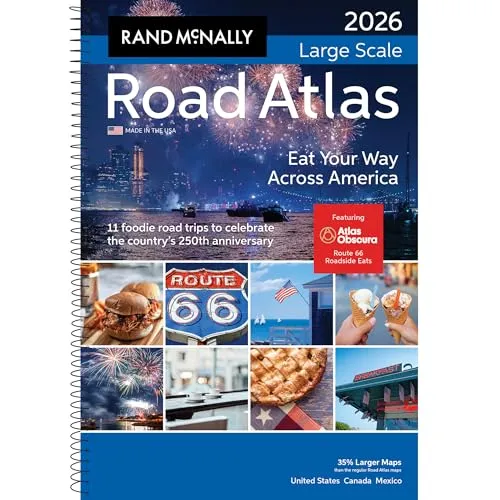 Photo: Rand McNally Road Atlas, via m.media-amazon.com
When Gas Stations Were Information Centers
Before smartphones, gas station attendants served as unofficial travel consultants across America. They didn't just pump gas and clean windshields—they dispensed local knowledge that no map could provide. "You don't want to take Highway 50 through those mountains at night," they'd warn. "Take the long way around—trust me."
These brief conversations shaped entire vacations. A friendly attendant might recommend a roadside diner that served the best pie in three states, or warn about construction that would add two hours to your drive. Families learned to ask questions: Which route has the prettiest scenery? Where's the nearest hospital? Is there anything worth seeing between here and Denver?
Compare that to today's sterile interaction at the pump. We swipe our cards, fill our tanks, and drive away without speaking to a single human being. Our phones have already calculated the optimal route, identified the highest-rated restaurants, and warned us about traffic delays. Efficient? Absolutely. But something essential was lost when we stopped needing to ask strangers for directions.
The Art of Getting Lost
Here's what modern families will never experience: the particular panic that set in when Dad realized he'd been driving east instead of west for the past hour. No gentle voice would announce "recalculating route." There was just the dawning horror of unfamiliar terrain and the knowledge that you'd have to find someone to ask for help.
Getting lost wasn't a glitch in the system—it was an inevitable part of long-distance travel. Families developed strategies for these moments. Some parents stayed calm and methodical, stopping at the next gas station to ask for directions. Others became increasingly agitated, driving faster and farther into unknown territory while insisting they knew exactly where they were.
Children learned valuable lessons during these unplanned detours. They discovered that their parents weren't infallible navigation experts. They watched families work together to solve problems in real time, with everyone contributing ideas about which direction felt right. They learned that sometimes the best discoveries happen when you're completely lost—like the roadside attraction shaped like a giant dinosaur, or the small-town diner that served breakfast all day.
The Disappearance of Discovery
Today's GPS-guided road trips follow predetermined paths with mathematical precision. Google Maps doesn't just know the fastest route—it knows about accidents, construction, and traffic patterns in real time. It guides us around problems we never even knew existed, delivering us to our destinations with ruthless efficiency.
This technological precision eliminated more than just wrong turns. It eliminated the possibility of genuine surprise. When every mile is mapped and every attraction is reviewed online, families arrive at their destinations having already seen photos of their hotel rooms and read detailed reviews of nearby restaurants. The mystery is gone before the journey begins.
Pre-GPS families approached their destinations with genuine curiosity. They didn't know what the hotel would look like until they pulled into the parking lot. They discovered restaurants by driving around and seeing which parking lots were full of local cars. They found attractions by following handmade signs or asking locals for recommendations.
The Lost Art of Family Navigation
Before smartphones, navigation was a collaborative family effort. Kids served as co-pilots, watching for exit signs and counting mile markers. Parents shared driving duties and direction-reading responsibilities. Teenagers learned to fold maps properly and understand the relationship between scale and distance.
These skills seem quaint now, but they represented something larger: families working together to solve problems in real time. When the map didn't match the road signs, everyone contributed theories about what went wrong. When construction forced an unexpected detour, the whole family participated in finding an alternative route.
Today's children grow up as passengers in their own transportation, watching their parents follow voice commands from a device. They don't learn to read landscape for clues about direction. They don't develop the spatial reasoning that comes from translating a two-dimensional map into three-dimensional reality. They don't experience the satisfaction of successfully navigating their family to a distant destination using nothing but paper and logic.
What We Gained and Lost
Modern navigation technology delivered exactly what it promised: efficiency, reliability, and stress reduction. Families reach their destinations faster and with less frustration. Parents don't fight about directions anymore. Children don't spend hours cramped in backseats, anxiously wondering if they're lost.
But efficiency came at a cost. We lost the shared adventure of uncertainty. We lost the pride that came from successfully navigating hundreds of miles using nothing but our wits. We lost the stories that began with "Remember that time we got completely lost in Utah and found that amazing...?"
Most importantly, we lost the understanding that getting lost isn't always a mistake—sometimes it's the beginning of the best part of the journey.