The Mystery Illness Era: When Americans Had to Trust Their Doctor's Best Guess
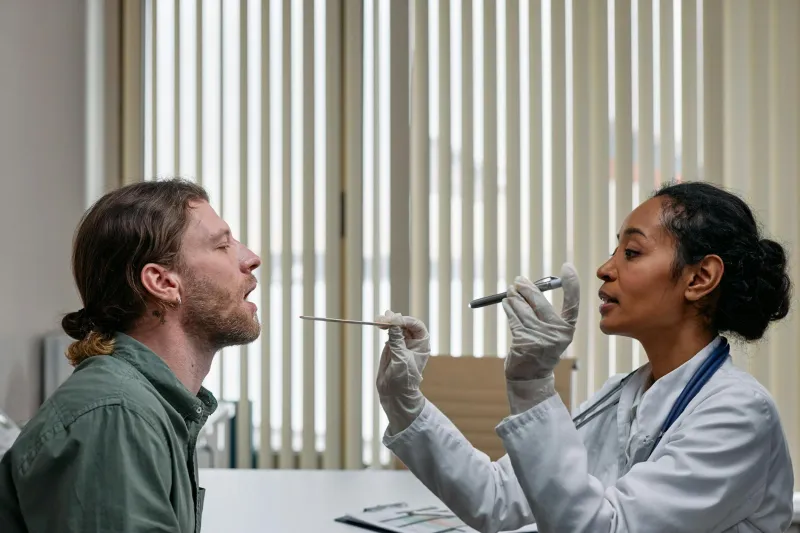
When Sickness Meant Surrender
In 1985, if you woke up with strange chest pains, a persistent rash, or unexplained fatigue, your options were remarkably limited. You couldn't pull out your phone and search "chest pain causes" or join an online support group for people with similar symptoms. Instead, you had three choices: call your doctor, flip through a dusty medical encyclopedia, or ask your mother what she thought.
This was the era of medical mystery—a time when patients surrendered their agency the moment they walked into a doctor's office. The physician held all the cards, all the knowledge, and all the power to decide what was wrong with you.
The Doctor as Oracle
Back then, your family doctor truly was like a neighborhood oracle. Dr. Peterson knew your family history not because he had access to electronic records, but because he'd been treating your parents for twenty years. When you described your symptoms, he'd lean back in his chair, stroke his chin thoughtfully, and deliver his verdict with the authority of someone whose medical degree hung prominently on the wall behind him.
There was no fact-checking his diagnosis on your drive home. No scrolling through patient forums to see if others had experienced similar symptoms. If Dr. Peterson said you had bronchitis, you had bronchitis. If he prescribed bed rest and aspirin, that's what you did—even if your gut told you something else was wrong.
The relationship was fundamentally paternalistic. Doctors didn't explain medical reasoning or walk you through differential diagnoses. They diagnosed, you accepted, and everyone moved on with their lives.
The Home Medical Bible
Most American households owned a copy of "The Merck Manual of Medical Information" or a similar tome—thick, intimidating books that promised to unlock medical mysteries but often left readers more confused than enlightened. These books were the pre-internet equivalent of WebMD, except they required actual page-turning and offered no search function.
Families would gather around the kitchen table, flipping through pages of medical illustrations and technical jargon, trying to match symptoms to conditions. "Does this look like what you have?" became a common refrain as relatives pointed to grainy photographs of various rashes and ailments.
But these books had a crucial limitation: they assumed you could accurately assess your own symptoms. Without medical training, most people couldn't distinguish between a "sharp, stabbing pain" and a "dull, throbbing ache"—descriptions that could mean the difference between a pulled muscle and something requiring immediate surgery.
When Second Opinions Required Second Appointments
Getting a second medical opinion in the pre-internet era wasn't just advisable for serious conditions—it was a logistical undertaking. You couldn't simply email your test results to another doctor or schedule a virtual consultation. Instead, you had to:
Make an appointment weeks in advance, request your medical records be transferred (a process that could take days or weeks), drive to a new office, sit in another waiting room, and start the entire diagnostic process from scratch.
This system naturally discouraged second opinions. Most people accepted their doctor's initial diagnosis rather than navigate the bureaucratic maze of seeking alternative perspectives. The result was a medical culture where patients rarely questioned authority, even when their instincts suggested something wasn't quite right.
The Anxiety of the Unknown
Perhaps the most dramatic difference was how Americans handled medical uncertainty. Today, if we have unusual symptoms, we can research conditions, read patient experiences, and arrive at our doctor's office with a list of possibilities. We've become active participants in our own healthcare.
In contrast, pre-internet patients lived with significantly more medical anxiety. Unusual symptoms could persist for months without explanation. Chronic conditions went undiagnosed because patients couldn't connect with others who shared similar experiences. The isolation was profound—you might be the only person you knew dealing with a particular set of symptoms.
This uncertainty created a different relationship with illness itself. People were more accepting of mysterious ailments, more willing to live with discomfort, and more trusting that their bodies would eventually heal themselves. There was less urgency to diagnose every ache and pain.
The Information Revolution's Impact
Today's patients arrive at medical appointments armed with printouts, research, and self-diagnoses. We've transformed from passive recipients of medical wisdom into active collaborators in our own care. Doctors now spend significant time debunking internet misinformation, explaining why that rare tropical disease probably isn't causing your headache.
This shift has democratized medical knowledge but also created new challenges. The same tools that help us become informed patients also fuel medical anxiety and hypochondria. We've traded the uncertainty of the unknown for the anxiety of knowing too much.
The Lost Art of Medical Trust
Looking back, there was something almost peaceful about the old system. Patients didn't spend hours researching their conditions or second-guessing their doctors' recommendations. They placed their trust in medical professionals and focused their energy on getting better rather than becoming amateur diagnosticians.
The internet has undoubtedly improved healthcare outcomes by empowering patients and facilitating faster diagnoses. But it's also fundamentally altered the doctor-patient relationship, transforming it from a relationship based on trust and authority into one based on collaboration and shared decision-making.
We've gained access to vast medical knowledge, but we've lost something too—the simple peace of mind that came with trusting your doctor's expertise and accepting that some things were beyond your understanding. In the era before Google, getting sick meant surrendering control, but it also meant surrendering worry.