Love Letters and Landlines: How Romance Survived the Days Between Messages
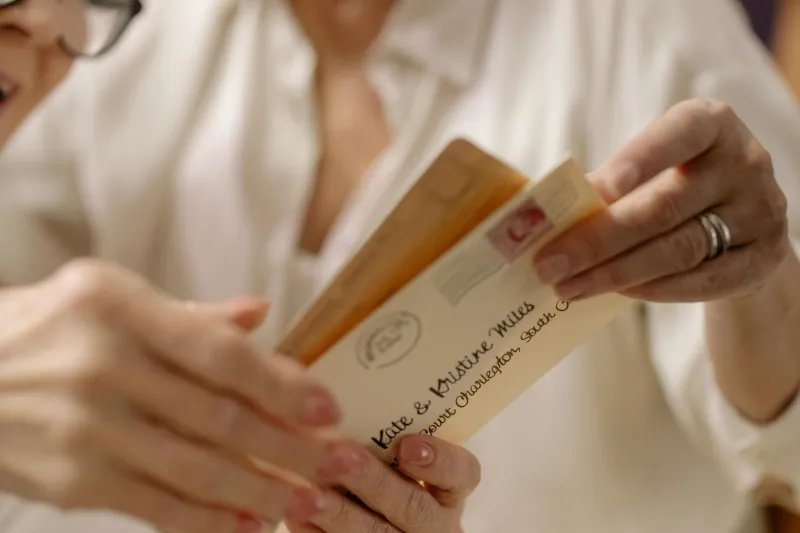
The Art of Waiting for Love
In 1985, if you wanted to tell someone you missed them, you had three options: write a letter and wait three days for it to arrive, spend your grocery money on a long-distance phone call, or keep it to yourself until you saw them again. There was no middle ground, no casual "thinking of you" fired off between meetings. Love moved at the speed of the postal service.
American romance operated on entirely different physics back then. Relationships weren't sustained by a constant drip of digital affection—they ran on concentrated doses of carefully crafted communication, separated by days or weeks of silence that somehow made the heart grow fonder instead of forgotten.
When Phone Calls Cost More Than Dinner
Long-distance relationships weren't just emotionally challenging in the pre-internet era—they were financially devastating. A 30-minute call from New York to Los Angeles in 1980 cost about $15, roughly equivalent to $50 today. College sweethearts separated by state lines had to budget their "I love yous" like luxury items.
Families developed elaborate strategies to beat the phone company. Sunday evenings offered slightly cheaper rates. Some couples synchronized their watches to make calls at exactly 11 PM when rates dropped. Others perfected the art of the "collect call code"—calling collect with a fake name that contained the real message, then hanging up before charges applied. "Will you accept a call from 'I-Miss-You-Call-Me-Tomorrow'?" became a guerrilla love language.
The Weight of Paper and Ink
Handwritten letters carried emotional gravity that no text message has ever matched. When someone sat down with pen and paper, they committed time and thought that couldn't be undone with a backspace key. Every word was permanent. Every cross-out revealed the writer's real thoughts. The physical act of writing slowed down communication enough to make it meaningful.
Young Americans developed elaborate letter-writing rituals. College students would save up stories throughout the week to fill their Sunday letters home or to distant boyfriends and girlfriends. The choice of stationery mattered—flowered paper suggested romance, while plain white conveyed seriousness. Some people kept carbon copies of important letters, creating their own relationship archives in shoeboxes under beds.
The Mailbox Lottery
Every trip to the mailbox was a small gamble with high stakes. Would today bring that letter you'd been waiting for, or just bills and catalogs? The anticipation built over days, creating an emotional intensity that instant messaging has never replicated. When a handwritten envelope finally appeared with familiar handwriting, the moment of opening it felt like Christmas morning.
Mailroom workers at colleges became inadvertent matchmakers, sorting through thousands of love letters each day. Students would hover around mail distribution times, hoping for thick envelopes from home or thin ones from romantic interests. The absence of a letter could ruin a day, while an unexpected one could transform a week.
Creating Space for Longing
The three-day delay between sending a letter and receiving a reply created something that modern relationships lack: space for longing. You couldn't immediately clarify a misunderstanding or send a quick reassurance. Instead, you lived with uncertainty, replaying conversations in your head, wondering how your last letter was received.
This forced patience created its own intimacy. Couples had time to miss each other properly, to build up stories worth sharing, to develop the kind of emotional anticipation that made reunions feel genuinely electric. The space between communications wasn't dead time—it was where desire lived and grew.
The Lost Art of Delayed Gratification
Modern relationships unfold in real-time, with every thought and feeling shared instantly. But pre-digital romance required emotional discipline that many psychologists argue made relationships stronger. When you couldn't immediately react to every mood or misunderstanding, you learned to process feelings internally first. When communication required effort and planning, people chose their words more carefully.
Couples developed deeper empathy because they had to imagine their partner's daily life without constant updates. They learned to trust without constant reassurance. They discovered that love could survive silence—and sometimes even thrive in it.
What We Gained and What We Lost
Today's instant communication has democratized long-distance relationships, making it possible to maintain connections across any distance. Modern couples can share every moment, every thought, every random observation that strengthens their bond. The barriers that once separated lovers have largely disappeared.
But something was lost when the wait disappeared. The anticipation that made hearts race at the sight of familiar handwriting. The weight that came with choosing words carefully. The space that allowed longing to develop into something deeper than constant contact ever could.
In our rush to eliminate the delays that once frustrated lovers, we may have also eliminated the very friction that made love feel urgent and precious. Sometimes the most meaningful messages aren't the ones that arrive instantly—they're the ones worth waiting for.