Long Distance Used to Cost You: The Vanished World of Planned, Precious Communication
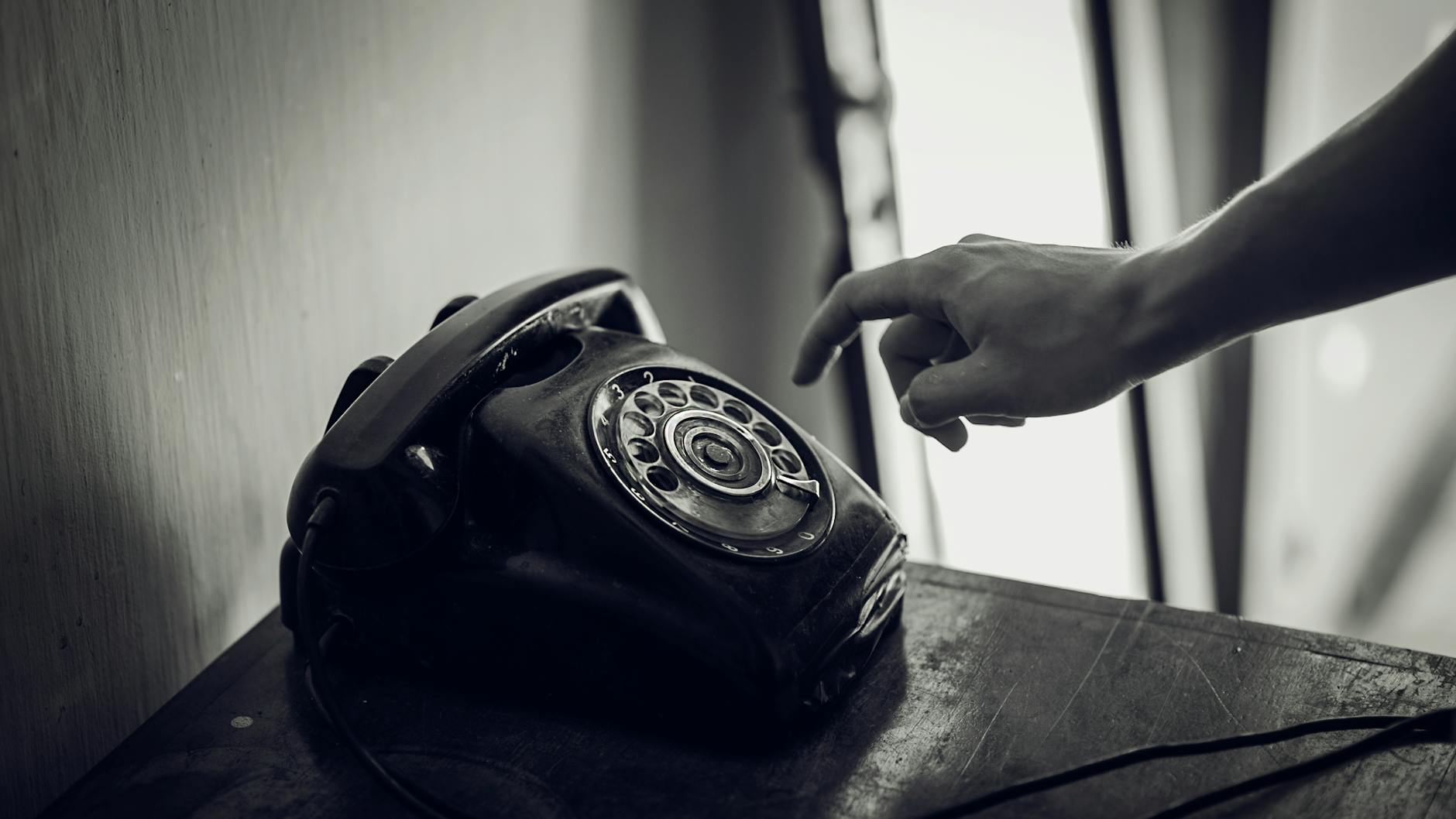
Long Distance Used to Cost You: The Vanished World of Planned, Precious Communication
Somewhere in the middle of the 20th century, calling your sister in another state was a financial decision.
Not a big one, necessarily — but a real one. Long-distance phone rates in the 1950s and 60s could run several dollars for just a few minutes, at a time when a dollar carried considerably more weight than it does today. Families developed habits around this reality. You called on Sundays, when rates were lower. You kept a mental clock running while you talked. You said what needed saying and got off the line. A long, leisurely conversation with a relative three states away wasn't a Tuesday afternoon activity — it was a deliberate, budgeted event.
And that's before we even get to the party line.
Shared Lines and Scheduled Calls
For a substantial portion of mid-century America, particularly in rural areas, the telephone wasn't a private instrument. Party lines — shared telephone circuits serving multiple households — were common well into the 1960s. Your neighbors could hear your calls if they picked up at the wrong moment. Or, depending on the neighbor, the right moment.
Privacy on the phone was not assumed. It was hoped for.
For those who did have private lines, the infrastructure of communication was still radically different from anything we'd recognize today. Calls were routed through operators for certain connection types. International calls required booking time in advance and could cost a week's wages for a short conversation. The idea of calling someone in London on a whim, just to chat, would have struck most Americans as either wildly extravagant or simply impossible.
Long distance wasn't just expensive. It carried a psychological weight. When the phone rang and someone announced it was a long-distance call, people gathered. It felt significant. Something important was being communicated, or someone important was on the line.
The Letter Was the Default
For routine, non-urgent communication — the kind we now handle with a quick text or a two-line email — the letter was the standard tool for most of American history, and remained deeply embedded in daily life well into the late 20th century.
Writing a letter was a considered act. You sat down, you chose your words, you folded the paper, addressed the envelope, found a stamp, and sent it off. Then you waited. A few days for delivery, a few days for a reply to be written and sent back, a few more days for it to reach you. A simple exchange of information that today takes 45 seconds could span two weeks.
What's easy to overlook is how that waiting shaped the emotional texture of relationships. Anticipation was built into communication itself. You expected to not hear back immediately, and that expectation was calibrated into how you felt about people and distance. Waiting wasn't a failure of connection — it was the nature of it.
The Economics of Staying in Touch
It's worth being specific about the financial dimension here, because it's one of the most overlooked aspects of how dramatically communication has changed.
In 1960, a three-minute coast-to-coast phone call during peak hours could cost the equivalent of $25 to $30 in today's dollars. Families with relatives spread across the country — which was increasingly common as postwar mobility scattered people from their hometowns — genuinely budgeted for long-distance calls the way they budgeted for groceries.
AT&T's long-distance rates didn't begin falling meaningfully until competition entered the market in the 1970s and 80s. The deregulation of the telecommunications industry, the rise of MCI and Sprint as competitors, and eventually the arrival of the internet progressively dismantled the cost structure that had made communication a rationed resource.
By the mid-2000s, unlimited long-distance was bundled into basic phone plans for a flat monthly fee. By the early 2010s, texting and data had effectively made the concept of "long distance" obsolete. Today, a video call to Tokyo costs nothing beyond a Wi-Fi connection.
The financial barrier to staying in touch didn't just fall — it essentially ceased to exist.
What Instant Replaced
It would be easy to read this as a pure progress story, and in many ways it is. The democratization of communication — the ability to stay genuinely close to people regardless of geography, at no meaningful cost — is one of the quiet miracles of contemporary life that doesn't get enough credit.
But there's a subtler story running alongside it.
When communication became frictionless, it also became ambient. The considered letter became the dashed-off text. The significant phone call became the group chat notification. The anticipation of waiting to hear from someone became the mild anxiety of wondering why they haven't replied in three hours.
We didn't just speed up communication. We changed what it means to communicate — who initiates, how often, how much attention each exchange carries. The rarity that once gave a long-distance call its weight has been replaced by a volume that makes any single message easy to overlook.
Neither world was perfect. One kept people at a distance they didn't always choose. The other connects them constantly in ways that aren't always meaningful.
The chasm between the two is enormous — and it happened, in the sweep of history, almost overnight.