From Brochures and Busy Signals to Booked Before Breakfast: The Death of the Vacation Planning Marathon
From Brochures and Busy Signals to Booked Before Breakfast: The Death of the Vacation Planning Marathon
There's a particular kind of chaos that older Americans remember well. It's a Sunday afternoon in 1978, and the kitchen table has disappeared under a mountain of AAA booklets, handwritten notes, and a road atlas that refuses to fold back the way it came. The kids want Disney World. Dad wants to drive. Mom is on hold with a travel agency that keeps playing the same eight bars of hold music. Nobody is having fun yet, and the trip is still six weeks away.
This was vacation planning. And for millions of American families, it was the only way it worked.
The Travel Agent Was the Algorithm
Before the internet flattened the information gap, knowledge about destinations lived in very specific places — and most of those places required a physical visit or a postage stamp to access.
Travel agencies were genuinely essential. Not just convenient, but necessary. If you wanted to book a flight to Florida, you went to a storefront, sat across a desk from someone who had hopefully been there, and trusted their judgment. They had access to airline reservation systems that the general public simply couldn't reach. They knew which hotels were worth the price and which ones had been coasting on a good review from 1964.
For international travel, the process got even more involved. You might write away to a national tourism board — an actual letter, sent to an actual address — and wait two to three weeks for a packet of brochures to arrive in the mail. Some families started planning summer vacations in January just to give themselves enough lead time.
And the cost research? That was its own project. Airfares weren't publicly listed in any searchable format. Your agent quoted you a price, you accepted or pushed back, and you largely hoped for the best.
The Map Was the GPS
Once the destination was locked in and the tickets were purchased, the navigation challenge began.
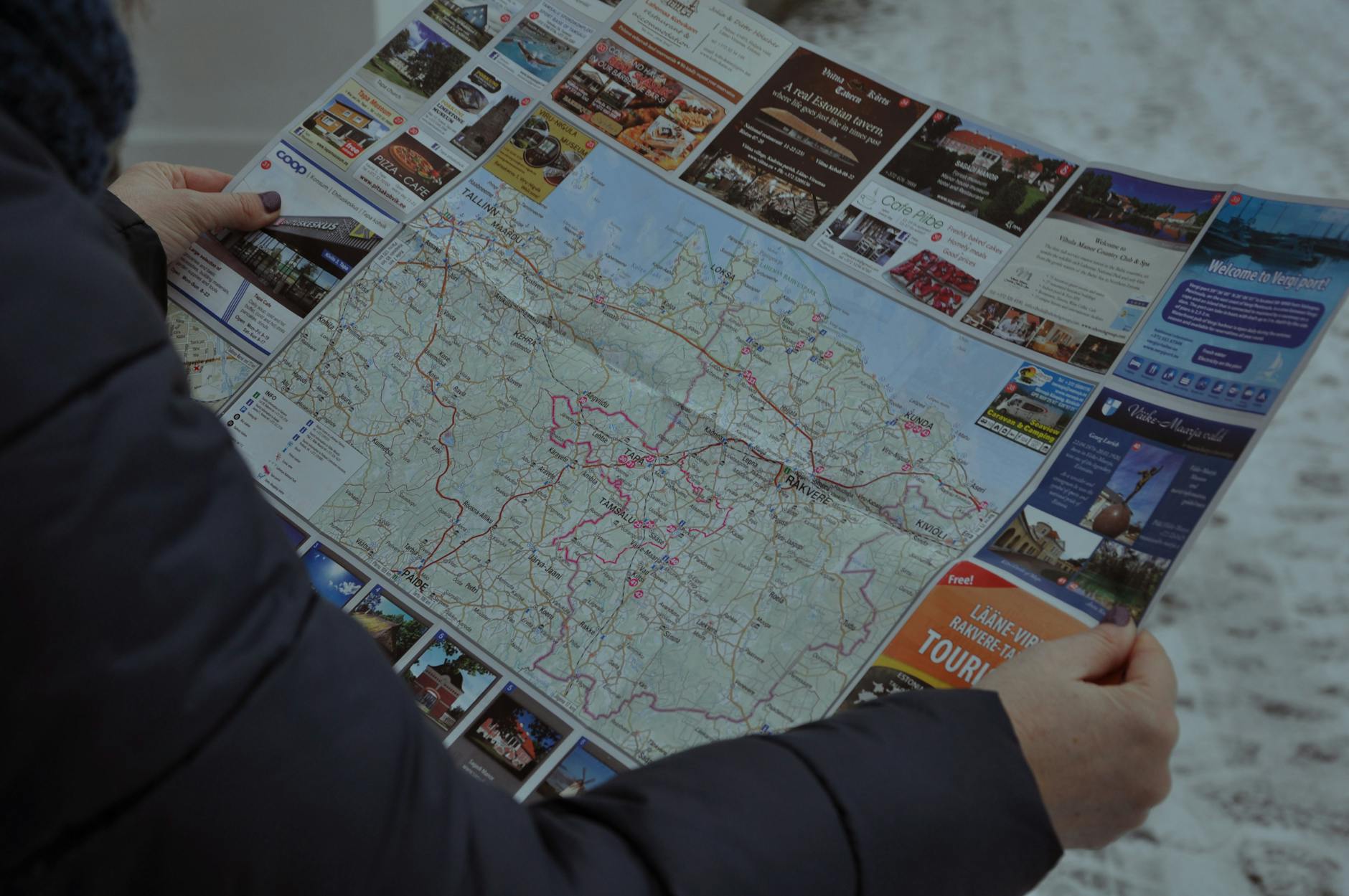
Fold-out road maps — the kind sold at gas stations for a dollar or two — were the primary tool for getting anywhere unfamiliar. They were enormous, unwieldy, and absolutely unforgiving if you missed a turn. Refolding them correctly was a minor life skill. Getting them back into the glove compartment was a test of patience.
For longer road trips, families often ordered a "TripTik" from AAA: a custom-bound flip booklet of maps charting your specific route, complete with handwritten notes from an actual AAA employee who had reviewed your itinerary. It was personalized, it was useful, and it took about a week to prepare and mail back to you.
Getting lost was a genuine possibility. Not the kind of lost where your phone reroutes you in four seconds — the kind where you pull into a gas station and ask a stranger who may or may not know the answer.
What 20 Minutes Looks Like Now
The contrast is almost absurd when you lay it out plainly.
Today, a reasonably organized person can research destinations, compare flight prices across multiple airlines, read hundreds of verified hotel reviews, book accommodations, reserve a rental car, download offline maps, and build a day-by-day itinerary — all from their phone, often before finishing a single cup of coffee.
Apps like Google Flights surface fare trends and predict whether prices are likely to drop. Platforms like Airbnb and Booking.com let you filter by neighborhood, amenities, and price range with surgical precision. Google Maps not only routes you door-to-door but tells you how long the line currently is at the attraction you're planning to visit on Thursday.
The information asymmetry that made travel agents indispensable has essentially evaporated. The average traveler today walks into a trip knowing more about their destination than most travel professionals did in 1980.
Something Got Faster. Something Got Quieter.
Here's the part worth sitting with, though.
All that waiting — the weeks of anticipation while brochures were in the mail, the ritual of spreading the map across the floor, the slow build of excitement as the trip took shape over time — that wasn't just inefficiency. It was experience. The planning was part of the vacation in a way that a 20-minute booking session simply isn't.
There's a reason people remember those kitchen-table planning sessions decades later. The friction created investment. You'd spent weeks thinking about this trip before you ever arrived, and that mental engagement made the destination feel earned.
None of that is an argument for going back. Waiting three weeks for a brochure is not romantic — it's just slow. But it's worth acknowledging that when we optimized the planning process down to a lunch break, we also compressed something that used to stretch out and build.
The chasm between then and now isn't just about convenience. It's about how we experience anticipation itself — and whether we've traded something real for something fast.