The Friday Rush to Beat the Bank Clock: When Accessing Your Money Required Perfect Timing
The Great Weekend Cash Panic
Picture this: It's 2:45 PM on a Friday afternoon in 1975, and you're sprinting down Main Street in your best office attire, briefcase bouncing against your leg. The First National Bank's heavy glass doors are still open, but you know that at exactly 3:00 PM, they'll lock tight—and with them, your access to your own hard-earned money until Monday morning.
This wasn't some rare emergency scenario. This was American banking, and for millions of people, it was just another typical Friday.
When Banks Kept Banker's Hours (And Nothing More)
The phrase "banker's hours" wasn't just a joke about cushy work schedules—it was a harsh reality that governed how ordinary Americans lived their financial lives. Most banks operated from 9 AM to 3 PM, Monday through Friday, with many closing for a full hour at lunch. Some branches might grudgingly stay open until 6 PM on Fridays, but that was considered a luxury service.
Saturday banking? Forget about it, unless you lived in a major city where a few progressive banks might open from 9 AM to noon. Sundays were absolutely out of the question, as were evenings, holidays, and pretty much any time that aligned with when working people actually had free time.
This meant that accessing your own money required the kind of strategic planning typically reserved for military operations. Workers would sneak out during lunch breaks, hoping their boss wouldn't notice the absence. Others would arrive at work late on Fridays, having stopped at the bank first thing in the morning to withdraw enough cash to last the weekend.
The Teller Knew Your Life Story
Walking into your local bank branch wasn't just a financial transaction—it was a social ritual. Dorothy behind the counter knew that you always withdrew $40 every Friday, that your wife preferred twenties over tens, and that you'd probably be back on Tuesday because you always underestimated how much you'd spend on groceries.
This personal relationship had its perks. If you were a regular customer in good standing, your teller might bend the rules slightly—maybe processing a withdrawal a few minutes after closing time, or calling you at home if a check bounced before it caused real problems. But it also meant that your financial business was inherently public. Everyone in line could see how much you were withdrawing, and bank employees knew intimate details about your spending patterns.
The Cash Calculation Crisis
Without the safety net of 24-hour access, Americans became masters of cash flow prediction. How much money would you need for the entire weekend? What about that unexpected dinner invitation on Sunday? Gas for the car? A trip to the movies?
Underestimate, and you'd find yourself borrowing from friends or simply going without. Overestimate, and you'd be carrying around more cash than felt safe, especially in an era when losing your wallet meant losing everything inside it with no electronic backup.
Smart families developed elaborate cash management systems. Some kept emergency money hidden in cookie jars or sock drawers. Others maintained relationships with multiple banks, hoping that if one was closed, another might be open. The truly prepared carried travelers' checks for emergencies, though cashing them on weekends often proved just as challenging as getting to a bank.
The Monday Morning Rush
Monday mornings at banks resembled something between a religious gathering and a barely controlled riot. Customers who had run out of cash over the weekend lined up before opening time, clutching deposit slips and withdrawal forms. The parking lots filled early, and tellers knew they were in for a busy start to the week.
This wasn't just about convenience—it was about economic survival. In an era when credit cards were rare and debit cards didn't exist, cash wasn't just king; it was the only currency that mattered for daily life. No cash meant no groceries, no gas, no entertainment, and no emergency purchases.
The ATM Revolution Changes Everything
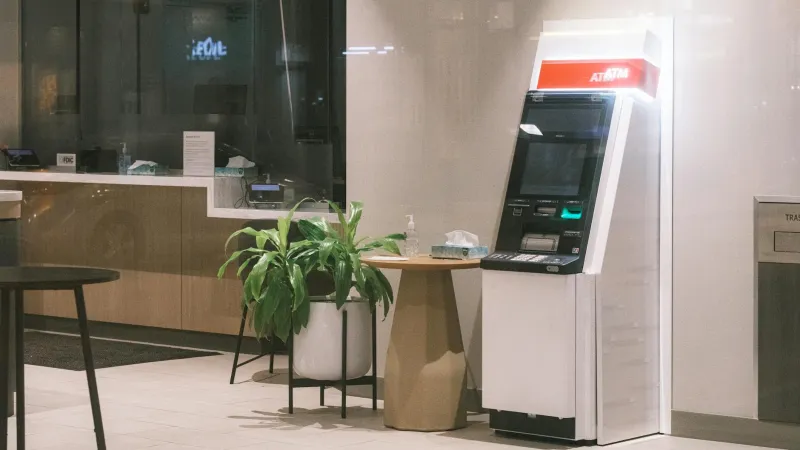
When the first ATMs began appearing in the late 1960s and early 1970s, banks marketed them as a novelty—a way to get cash when the branch was closed. Few predicted they would fundamentally transform how Americans related to their money.
Suddenly, the tyranny of banker's hours crumbled. Need cash at 11 PM on a Sunday? No problem. Forgot to stop by the bank before a weekend trip? The machine on the corner had you covered. The careful calculations and strategic planning that had defined personal finance for generations became obsolete almost overnight.
What We Lost in the Digital Translation
Today, we can access our money from virtually anywhere at any time. Mobile banking apps let us transfer funds, pay bills, and check balances from bed. The idea of being trapped without access to our own money seems almost medieval.
But something was quietly lost in this transformation. Banking became impersonal and transactional. The human relationships that once defined financial services—where your banker knew your name, your family situation, and your financial goals—dissolved into automated systems and call centers.
The Friday afternoon rush to beat the bank clock might have been stressful, but it also created a shared experience that connected entire communities. Everyone understood the stakes, everyone planned around the same constraints, and everyone had stories about close calls and weekend cash crises.
The End of an Era
By the 1990s, the old banking world had essentially vanished. ATMs multiplied like mushrooms after rain, appearing in grocery stores, gas stations, and shopping malls. Banks extended their hours, opened weekend branches, and eventually moved much of their business online.
The generation that once planned their entire weekend around a Friday afternoon bank run now watches their grandchildren tap plastic cards and phones to pay for coffee, probably never realizing that accessing your own money once required the kind of advance planning typically reserved for international travel.
It's a reminder of how quickly the fundamental structures of daily life can change—and how the conveniences we take for granted today were once somebody else's major life obstacle, solved through community, planning, and a healthy respect for the almighty bank clock.