The Act of Faith
Every photograph was a leap of faith. You'd frame the shot, hold your breath, and press the shutter, knowing you wouldn't see the results for days or even weeks. That wedding reception dance, that spectacular mountain vista, that candid moment of your toddler's first steps—all of it disappeared into the camera's mechanical depths, leaving you with nothing but hope and the advancing number on your frame counter.
The weight of uncertainty made every shot precious. With only 24 or 36 exposures per roll, you couldn't afford to be casual. Each click of the shutter represented real money—not just the cost of film, but developing and printing fees that could easily run $10-15 per roll in today's money. Photography wasn't just about capturing moments; it was about choosing which moments deserved to be preserved.
The Ritual of the Roll
Film photography imposed a rhythm on life that digital natives can barely imagine. You'd load a fresh roll with the ceremony of someone handling precious cargo, carefully threading the leader onto the take-up spool, advancing the film until the counter showed "1," and closing the back with a satisfying click.
Then came the discipline of rationing. Family vacations became exercises in photographic economics. Do you waste a shot on that roadside attraction, or save it for something better down the road? The Grand Canyon definitely deserved multiple frames, but what about that interesting cloud formation? Every decision carried weight because every frame cost money and couldn't be undone.
The counter became your constant companion, a reminder of dwindling opportunities. Reaching the end of a roll mid-vacation was a minor crisis that required careful planning and strategic shot selection.
The Agony of the Wait
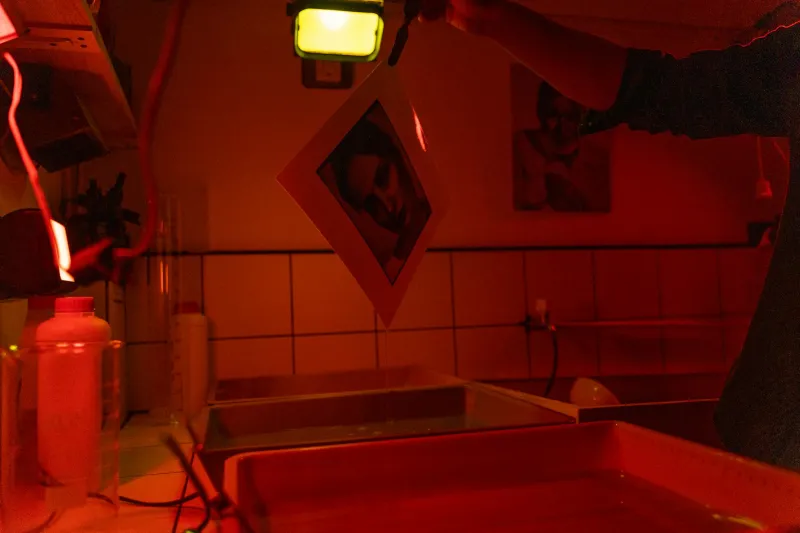
Perhaps nothing captures the film era better than the anticipation between shooting and seeing. You'd drop off your rolls at the drugstore photo counter, pay your fee, and receive a ticket with a pickup date that felt impossibly far away. One-hour photo was a luxury service that cost extra; most people waited three to five days for their pictures.
The drive back to collect your photos carried unique excitement and dread in equal measure. Would that sunset actually look as spectacular as you remembered? Did everyone's eyes close in the family portrait? Was the flash too bright, or not bright enough? The envelope of prints held mysteries that could make or break your memories of entire trips.
The Economics of Memory
Film photography created a completely different relationship with image-making. Every shot had a direct, immediate cost that made you consider whether a moment was truly worth preserving. A typical family might shoot three or four rolls during a week-long vacation—maybe 100-150 photos total. Today, that same family might take 100 photos before breakfast on day one.
The expense wasn't just in film and developing. Storage meant physical photo albums, boxes, or drawers full of prints that took up real space in your home. Sharing photos required making duplicate prints or passing around the originals, hoping they'd eventually make their way back to you.
Professional photographers carried this burden even more heavily. Wedding photographers might shoot 10-15 rolls per event, knowing that developing costs alone could run hundreds of dollars. Every frame had to count, creating a discipline and intentionality that shaped the entire profession.
The Surprise Factor
Film photography's greatest frustration was also its most delightful surprise: you never knew what you'd captured until it was too late to change anything. Sometimes this meant devastating disappointment—an entire vacation's worth of memories rendered useless by a camera malfunction or incorrect settings.
But just as often, it meant unexpected magic. Photos you barely remembered taking would emerge from the developer as perfect captures of fleeting moments. The slight blur that would ruin a digital photo might add artistic motion to a film shot. Accidental double exposures created surreal compositions that no amount of digital manipulation could replicate.
The randomness extended to the technical aspects. Slight variations in processing, temperature, and timing meant that identical shots could look completely different. Each roll had its own character, its own subtle color cast or grain structure that made it unique.
The Social Aspect
Getting photos developed was a communal experience. Photo labs were neighborhood gathering places where you'd run into friends picking up their own prints. Sharing photos meant physical handoffs—passing around prints at family gatherings or mailing copies to distant relatives.
The delayed gratification created natural storytelling opportunities. By the time you got your vacation photos back, enough time had passed to gain perspective on the trip. Sharing them became a way to relive and reinterpret the experience, often weeks after returning home.
The Digital Revolution
The transition to digital photography didn't just change the technology—it fundamentally altered our relationship with image-making. Suddenly, every shot was free, every mistake erasable, every moment reviewable instantly on the camera's LCD screen.
The liberation was intoxicating. No more rationing shots, no more waiting for development, no more wondering if the photo turned out. But something was lost in the translation: the weight of decision, the anticipation of discovery, the precious scarcity that made each successful photograph feel like a minor miracle.
The Paradox of Abundance
Today's smartphone users take more photos in a month than many film photographers shot in a year. Yet studies suggest we actually print and preserve fewer images than ever before. The ease of digital photography has made image-making effortless but also somehow less meaningful.
The thousands of photos stored on phones and cloud services often remain unseen after the initial capture. The physical albums that once anchored family storytelling have been replaced by scrollable galleries that few people ever scroll through.
The Lost Art of Patience
Film photography taught patience in ways that extended far beyond camera operation. You learned to wait for the right moment, to consider composition carefully, to accept uncertainty as part of the creative process. The delayed gratification of seeing results forced a different relationship with time and expectation.
That patience created space for surprise, disappointment, and genuine discovery. The envelope of prints from your vacation contained mysteries that couldn't be googled or instantly reviewed. Sometimes those mysteries were disappointments, but just as often they were gifts—perfect moments captured better than you dared hope.
The era when every photograph was a gamble is gone forever, replaced by the certainty and abundance of digital imaging. Whether we gained or lost something in that trade might depend on how much you value the surprise of not knowing what you've captured until it's too late to change it.