The Ritual of the Medicine Run
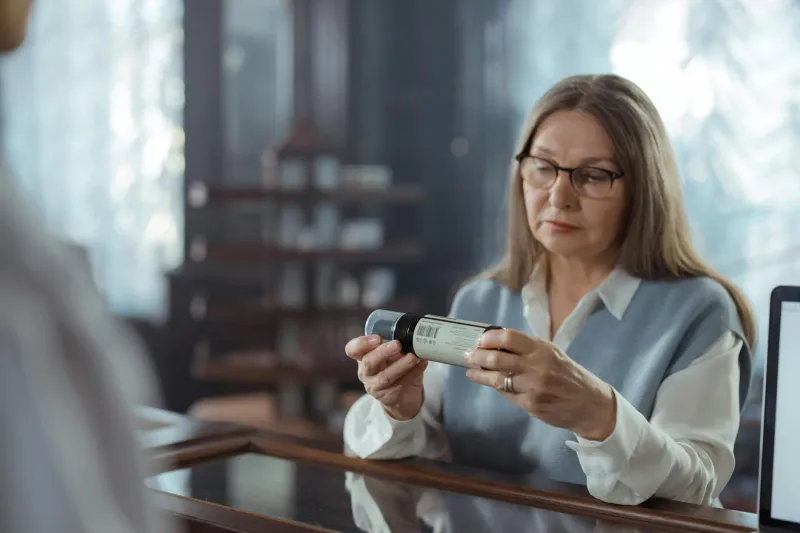
Every Tuesday morning, Margaret would drive to Walgreens with a small stack of orange bottles, each one rattling with just enough pills to last until Thursday—maybe Friday if she stretched them. She'd hand the bottles to the pharmacist, who would squint at the labels through thick glasses, then disappear into the maze of white shelves behind the counter. Sometimes he'd return in five minutes. Sometimes she'd wait an hour, thumbing through magazines while other customers shuffled behind her, all of them united in the same quiet anxiety: Would their medication be ready today?
This was prescription management in 1985 America, and it required the kind of advance planning that NASA used for moon launches.
When Your Health Depended on Store Hours
Before online pharmacies transformed healthcare into a point-and-click experience, Americans navigated a complex system where timing was everything. Pharmacies closed at 6 PM sharp and stayed locked up tight on Sundays. If you realized on Saturday night that you were down to your last blood pressure pill, you had two choices: ration what you had or spend Sunday worrying about Monday morning.
The smart patients—the ones who'd learned the hard way—kept detailed calendars marking refill dates two weeks in advance. They knew which pharmacies stayed open late on Thursdays and which ones always seemed to run out of the most common medications right when you needed them most.
"I had a little notebook," remembers Janet Morrison, now 67, who managed diabetes throughout the 1970s and 80s. "I wrote down every pill, every dose, every refill date. If I didn't plan ahead, I could end up in real trouble. There was no calling ahead to check—you just showed up and hoped."
The Great Insurance Card Shuffle
Today's patients swipe a card or enter their information once online, and their insurance coverage follows them everywhere. But in the pre-digital era, every pharmacy visit began with the insurance verification ritual. The pharmacist would pull out a thick binder—sometimes multiple binders—and flip through page after page of tiny print, looking for your specific plan code.
If your card was bent, faded, or missing entirely, you were looking at full retail prices that could easily cost more than a car payment. A month's supply of heart medication might run $200—real money when the median household income was $23,000.
The worst part? You wouldn't know the final price until after you'd waited in line for twenty minutes. Patients would stand at the counter, wallet in hand, mentally calculating whether they could afford both their medication and groceries that week.
When "Out of Stock" Meant Out of Luck
Modern patients expect their prescriptions to be available instantly, but pharmacy inventory in the 1980s operated on educated guesswork. Pharmacists ordered medications based on their best estimates of demand, and when they guessed wrong, patients paid the price.
"We'd get a shipment on Tuesdays," recalls Tom Bradley, who worked as a pharmacist in suburban Chicago for thirty years. "If we ran out of something popular—blood pressure meds, diabetes supplies—people would have to wait until the next delivery. Some would drive to three or four different pharmacies, hoping to find what they needed."
For patients managing chronic conditions, this uncertainty added a layer of stress that went far beyond the physical symptoms of their illness. Running out of medication wasn't just inconvenient—it was potentially dangerous. Yet this risk was so common that most Americans accepted it as a normal part of healthcare.
The Personal Touch That Technology Erased
But the old system had something today's digital efficiency can't replicate: genuine human connection. Pharmacists knew their regular customers by name, remembered their medical histories, and often caught dangerous drug interactions through personal familiarity rather than computer algorithms.
"Mr. Patterson would come in every month for his heart pills," Bradley remembers. "I knew he also took aspirin for his arthritis, even though he bought that over the counter. When his doctor prescribed a new blood thinner, I caught the interaction because I knew his habits. A computer might have missed that."
Pharmacists served as informal healthcare counselors, answering questions about side effects, suggesting generic alternatives when money was tight, and sometimes extending credit to customers going through rough patches. These relationships developed over years of face-to-face interactions that created a safety net of human attention.
The Modern Medicine Machine
Today's prescription management happens largely without human intervention. Apps remind us when refills are due, medications arrive by mail before we've even thought about running low, and insurance pre-authorizations process automatically in the background. The friction that once made managing chronic illness a part-time job has essentially disappeared.
Patients can now comparison shop for the best prices online, read detailed reviews of medications, and access their prescription history with a few taps on their phone. The anxiety of wondering whether your medication will be available has been replaced by the mild annoyance of choosing between same-day delivery or picking up at the drive-through.
What We Lost in the Translation
The efficiency gains are undeniable—modern prescription management is faster, more reliable, and often cheaper than what previous generations endured. But something intangible disappeared when we digitized the medicine cabinet. The pharmacist who knew your name has been replaced by an algorithm that knows your data. The human judgment that once caught dangerous interactions has been automated, sometimes missing the subtle patterns that only come from personal familiarity.
More than anything, we lost the shared understanding that managing your health was hard work that required planning, patience, and a little bit of luck. Today's patients have been liberated from that burden, but they've also been disconnected from the reality of what keeping yourself healthy actually costs—not just in money, but in time, attention, and human care.
The prescription bottle that arrives in your mailbox today represents the culmination of a logistical revolution that would seem like magic to Margaret, still making her Tuesday morning medicine runs in 1985. Whether we've gained more than we've lost depends on what you value more: the convenience of never having to think about your pills, or the comfort of knowing that someone, somewhere, was thinking about you.