The Information Wasteland
Walk into a car dealership today, and you probably know more about the vehicle's true cost than the salesperson does. In 1985, you knew absolutely nothing.
Back then, car shopping was an exercise in blind negotiation. There was no Kelley Blue Book website, no Edmunds.com, no way to research invoice prices or compare deals across town. The sticker price was your only reference point, and even that felt negotiable in ways you couldn't quite understand. You were completely at the mercy of whatever the salesman decided to tell you—and they knew it.
The power dynamic was so lopsided it bordered on comical. Customers would drive from lot to lot, collecting business cards and half-remembered price quotes, trying to piece together some sense of fair market value. Meanwhile, salespeople had thick binders full of invoice costs, holdback percentages, and regional incentives that might as well have been state secrets.
The Ritual of the Runaround
Buying a car wasn't just a transaction—it was a full-contact sport that could consume entire weekends. The process had an almost theatrical quality, with established roles and predictable scenes.
First came the lot walk, where you'd browse rows of cars with window stickers that seemed designed to confuse rather than inform. Then the salesman would appear, usually within minutes, ready to begin the elaborate dance of qualification, demonstration, and negotiation.
The test drive was brief and supervised, more of a formality than genuine evaluation. Real research meant crawling under the hood, checking the trunk space, and trying to imagine how this particular shade of blue would look in your driveway. There were no online reviews from actual owners, no reliability ratings, no safety test results at your fingertips.
The Waiting Game
Perhaps nothing captures the old car-buying experience better than the waiting. Not just the hours spent in dealership offices, but the weeks or months waiting for your specific car to arrive.
Want a red Camaro with manual transmission and no air conditioning? That'll be six to eight weeks, assuming the factory could even build that combination. Many buyers settled for whatever was on the lot, or placed special orders and hoped the car would arrive before their current vehicle died completely.
The anticipation was genuine—you'd literally ordered a car sight unseen, based on a brochure photo and the salesman's assurances. When it finally arrived, the dealership would call with the reverence usually reserved for announcing births or lottery winnings.
The Financing Mystery
If researching cars was difficult, understanding financing was nearly impossible. Interest rates were whatever the dealership's finance manager quoted, and you had little way to verify if you were getting a fair deal. Shopping for auto loans meant calling banks individually or visiting in person, armed with nothing but your credit score estimate and hope.
The finance office became another negotiation battlefield. Extended warranties, paint protection, and mysterious add-ons appeared on contracts like unwelcome party guests. You could accept them, reject them, or try to negotiate, but you were operating without any external reference points for what these services actually cost or whether you needed them.
The Transformation
Today's car-buying experience would be unrecognizable to someone from the 1980s. Customers arrive at dealerships already knowing the invoice price, current incentives, and fair market value. They've read dozens of owner reviews, watched video tours, and compared safety ratings from multiple sources.
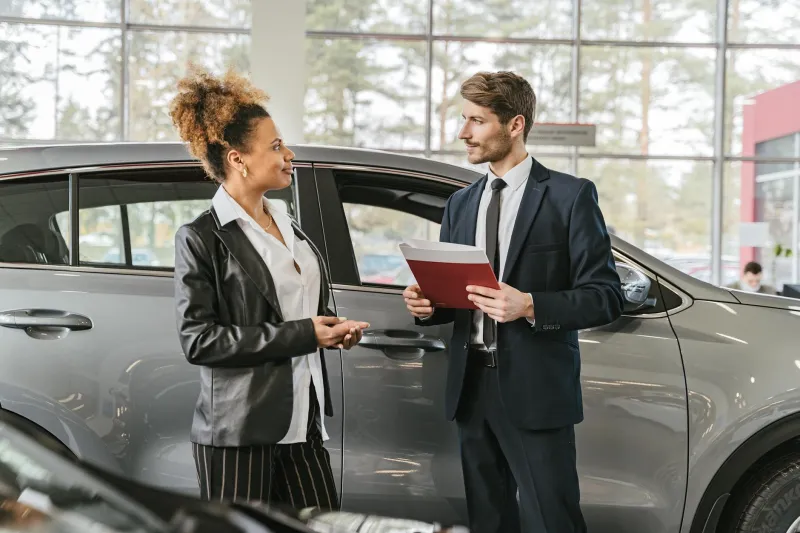
The salesperson's role has fundamentally changed from information gatekeeper to transaction facilitator. The elaborate negotiation dance still exists, but customers now enter with something approaching equal information. Some buyers even complete most of the process online, reducing the dealership visit to little more than paperwork and key exchange.
The Lost Art of Trust
What's been lost in this transformation is harder to quantify. The old system was inefficient and often unfair, but it was also deeply human. Customers developed relationships with salespeople and service departments that could last for decades. Your car salesman might become a family friend, someone who knew your driving habits and budget constraints.
The expertise was real, even if it was unevenly shared. A good salesman could match customers with vehicles they'd never considered, or talk them out of purchases they'd later regret. The personal touch extended to service departments, where mechanics might recognize your car's quirks and history.
The Price of Perfect Information
The internet democratized car buying in ways that seemed impossible in 1985. Information that once required industry connections is now available to anyone with a smartphone. Price transparency has made the process fairer and more efficient.
But something was lost in translation. The ritualistic aspects of car buying—the weekend lot visits, the extended negotiations, even the anticipation of waiting for your special order—created emotional investment that today's streamlined process often lacks.
Modern car buying is undeniably better for consumers, but it's also somehow less memorable. The car you research online, order with a few clicks, and pick up in an hour might be perfect for your needs, but it's unlikely to generate the stories that made the old system frustrating and unforgettable in equal measure.
The era when buying a car meant surrendering your Saturday to pushy salesmen and blind negotiations is gone forever. Whether that's entirely a good thing might depend on how much you value efficiency over experience.